At the end of every month, NOAA updates its Outlook for the following month which in this case is January of 2025. We are reporting on that tonight. In this article, I refer to January 2025 as “The New Month”.
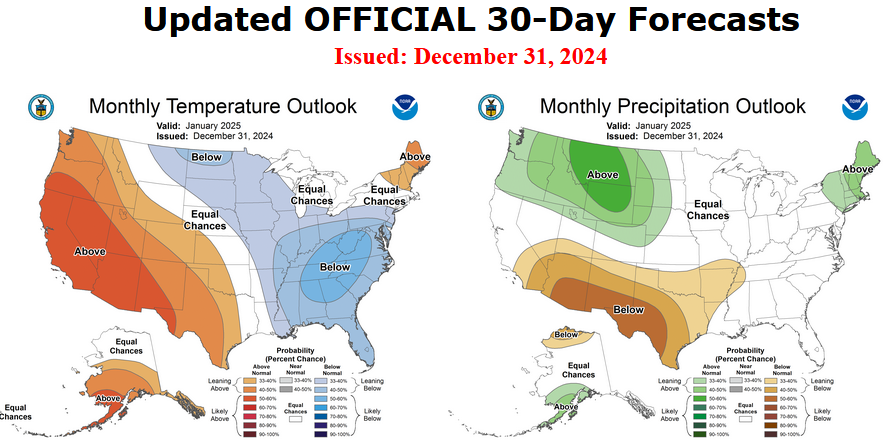
There have been significant changes in the Outlook for the new month and these are addressed in the NOAA Discussion so it is well worth reading. We provided the prior Mid-Month Outlook for the new month for comparison. It is easy to see the substantial changes in the weather outlook by comparing the Mid-Month and Updated Maps. My comments are in a box.
The article includes the Drought Outlook for the new month. NOAA also adjusted the previously issued three-month Drought Outlook to reflect the changes in the new month’s Drought Outlook. We also provide the Week 2/3 Tropical Outlook for the World. The Tropical Outlet includes both direct and indirect potential impacts to the Southern Tier of CONUS. We also include a whole set of forecasts for parts of the new month. These are both useful and provide a crosscheck on the validity of the new month’s Outlook. The whole should be equal to the sum of its parts.
The best way to understand the updated outlook for the new month is to view the maps and read the NOAA discussion. I have highlighted the key statements in the NOAA Discussion.
Here is the updated Outlook for January 2025.
For Comparison Purposes, Here is the earlier Mid-Month Outlook for January, 2025
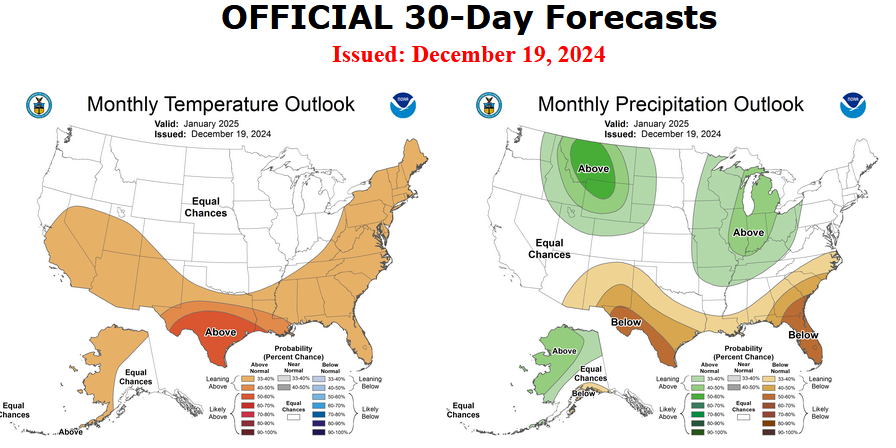
| It is important to remember that the maps show deviations from the current definition of normal which is the period 1991 through 2020. So this is not a forecast of the absolute value of temperature or precipitation but the change from what is defined as normal or to use the technical term climatology.
It is a substantial change from what was issued on December 19, 2024November 21, 2024. Remember, it is the first set of maps that are the current outlook for January which is the new month. One expects some changes 12 days later. However, the changes to the updated new month Outlook are very significant. This then might give us some reason to question the (December 19, 2024) three-month JFM temperature and precipitation Outlooks which are shown in the following graphic. Or one might say that La Nina has arrived too late to be a big factor for January and the impact of the MJO is much more than originally forecast. Thus the February and March Outlooks may still be valid. |
NOAA provided a combination of the Updated Outlook for the New Month and the Three-Month Outlook.
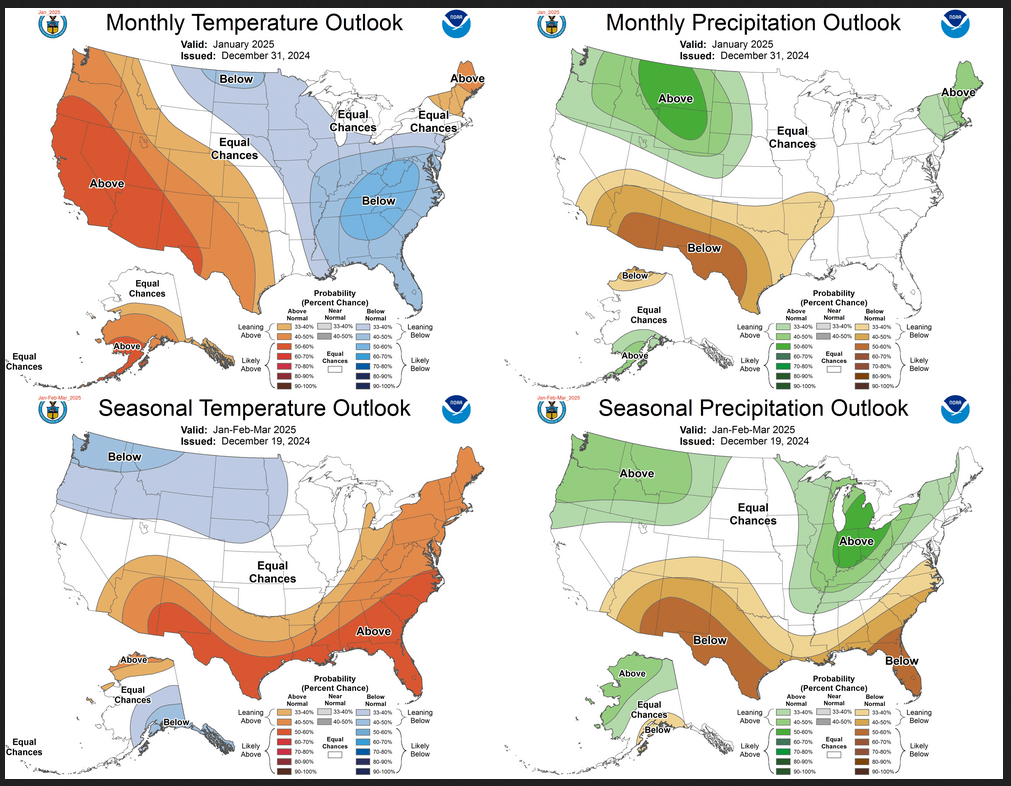
The top pair of maps are again the Updated Outlook for the new month. There is a temperature map and a precipitation map. The bottom row shows the three-month outlooks which includes the new month. I think the outlook maps are self-explanatory.
To the extent that one can rely on a forecast, we would conclude that February and March will be very different than January particularly with respect to temperature. You can subtract January from the three-month Outlook and divide by two to get a combined February/March Outlook.I am still not convinced that there will be a La Nina Winter. Thus I am somewhat skeptical about the NOAA Outlooks. |
Some readers may need to click “Read More” to read the rest of the article. Some will feel that they have enough information. But there is a lot more information in the rest of this article.
| Our regular Daily Weather article can be found HERE. In addition to the short-term forecast it also provides the 6 – 10 day, 8 – 14 day, and Week 3 – 4 Outlooks. That is not a full month but close to it. So it is helpful if one wants to understand how the full-month forecast is expected to vary through the month. The maps in the Daily Article are updated throughout the month. But I have many of those maps right here in this article. |
What we knew about December before NOAA issued their Updated Outlook for December. It should update in this article but if not, you can find the updated version at econcurrents.com daily.
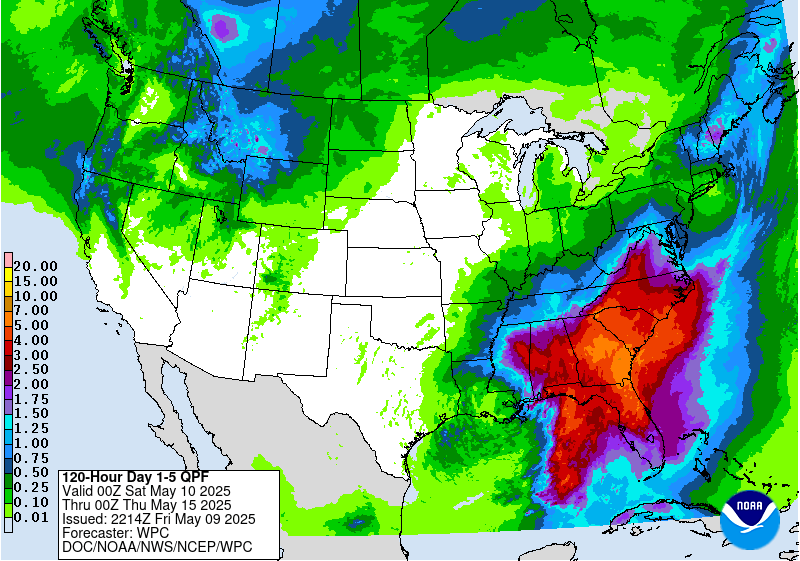
Below is the current five-day cumulative forecast of precipitation (Updates can be found HERE) Unfortunately I do not have a five-day temperature forecast.
Now we look at Intermediate-Term “Outlook” maps for three time periods. Days 6 – 10, Days 8 – 14, and Weeks 3 and 4. An outlook differs from a forecast based on how NOAA uses these terms in that an “outlook” presents information as deviation from normal and the likelihood of these deviations.
Below are the links to obtain updates and additional information. They are particularly useful if you happen to be reading this article significantly later than when it was published. I always try to provide readers with the source of the information in my articles. These links may also be useful for those viewing this article on a cell phone or other small screen.
| Days 6 – 10 (shown in Row 1) | Days 8 – 14 (Shown in Row 2) | Weeks 3 and 4 (Shown in Row 3 but updates only on Fridays) |
| https://www.cpc.ncep.noaa. gov/products/predictions/610day/ | https://www.cpc.ncep .noaa.gov/products/predictions/814day/ | https://www.cpc.ncep.noaa.gov/products/predictions/WK34/ |
Showing the actual maps. They should now update automatically. The Week 3 – 4 Outlook only updates on Fridays. So below is what I call the Intermediate-term outlook. On Fridays, it extends out 28 Days. That declines day by day so on Thursday it only looks out 22 days until the next day when the Week 3 – 4 Outlook is updated and this extends the outlook by one additional week.
| 6–10
|
|
|
| 8–14 |
|
|
| 3–4 |
|
|
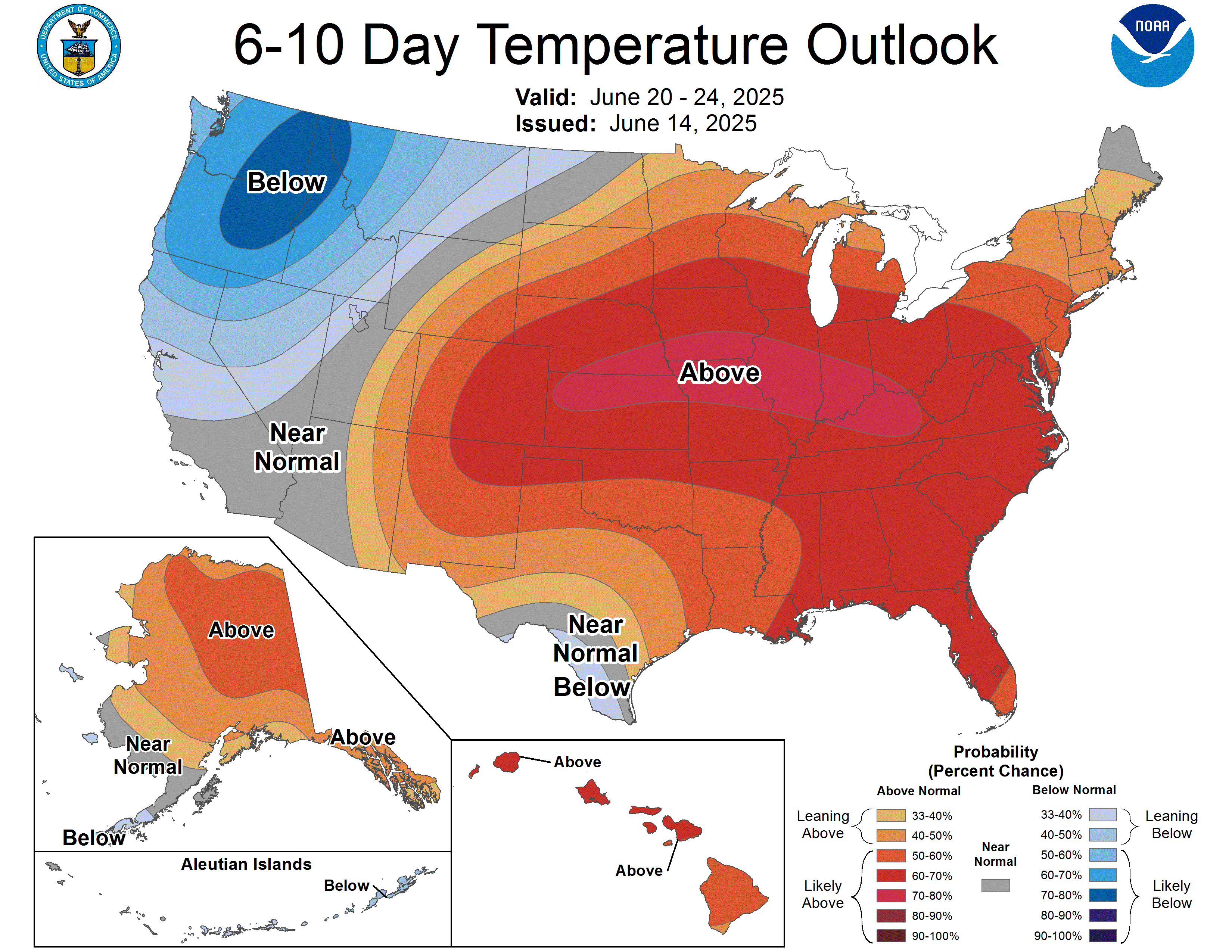
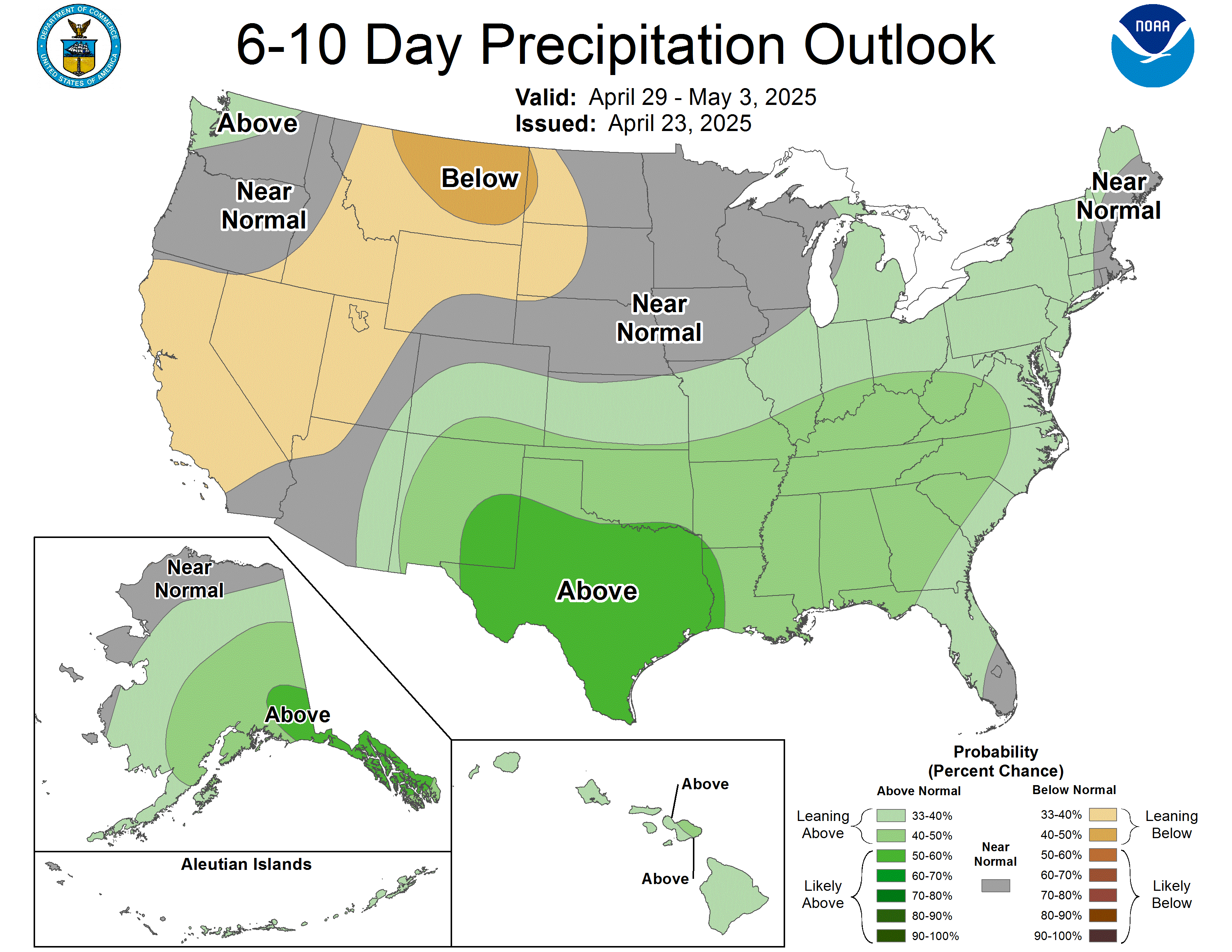
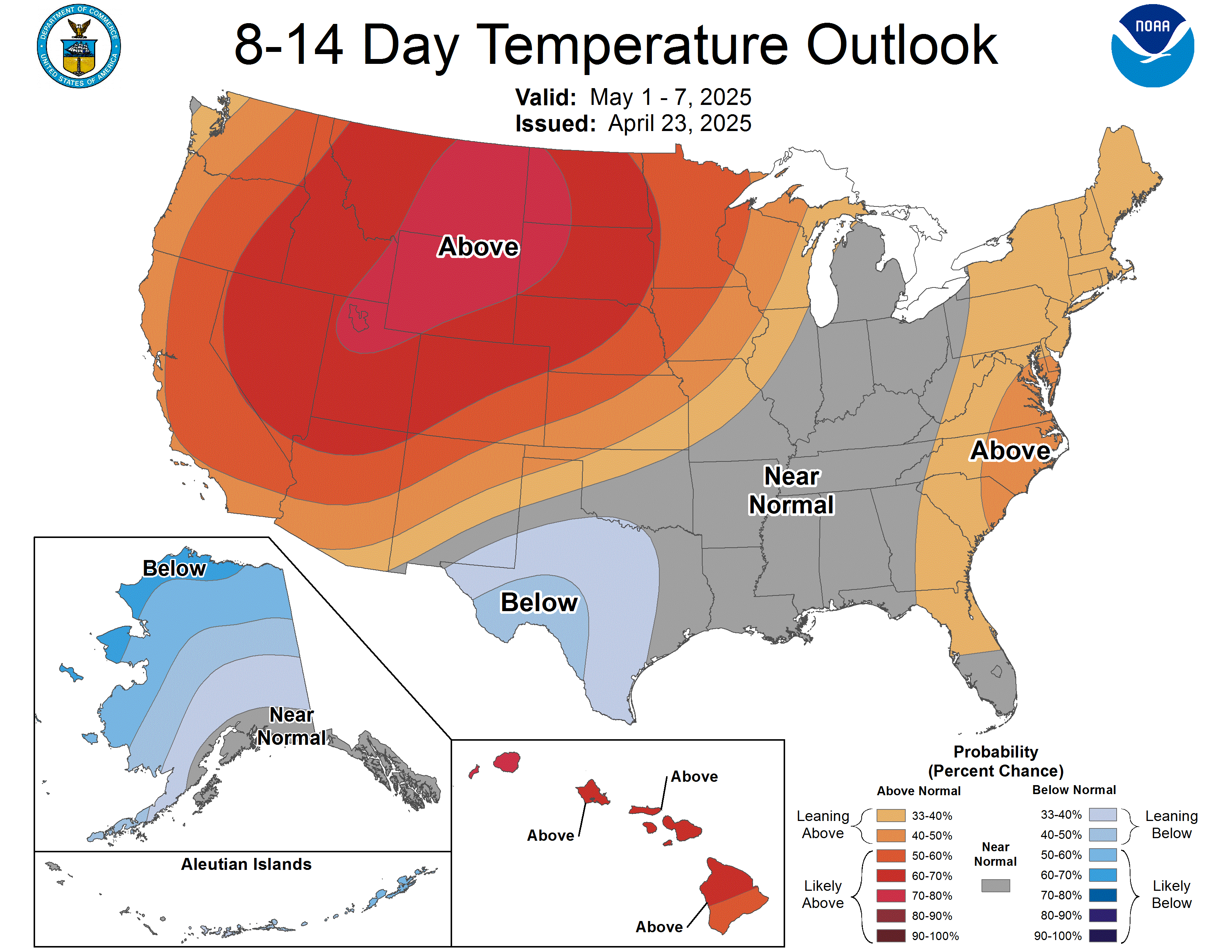
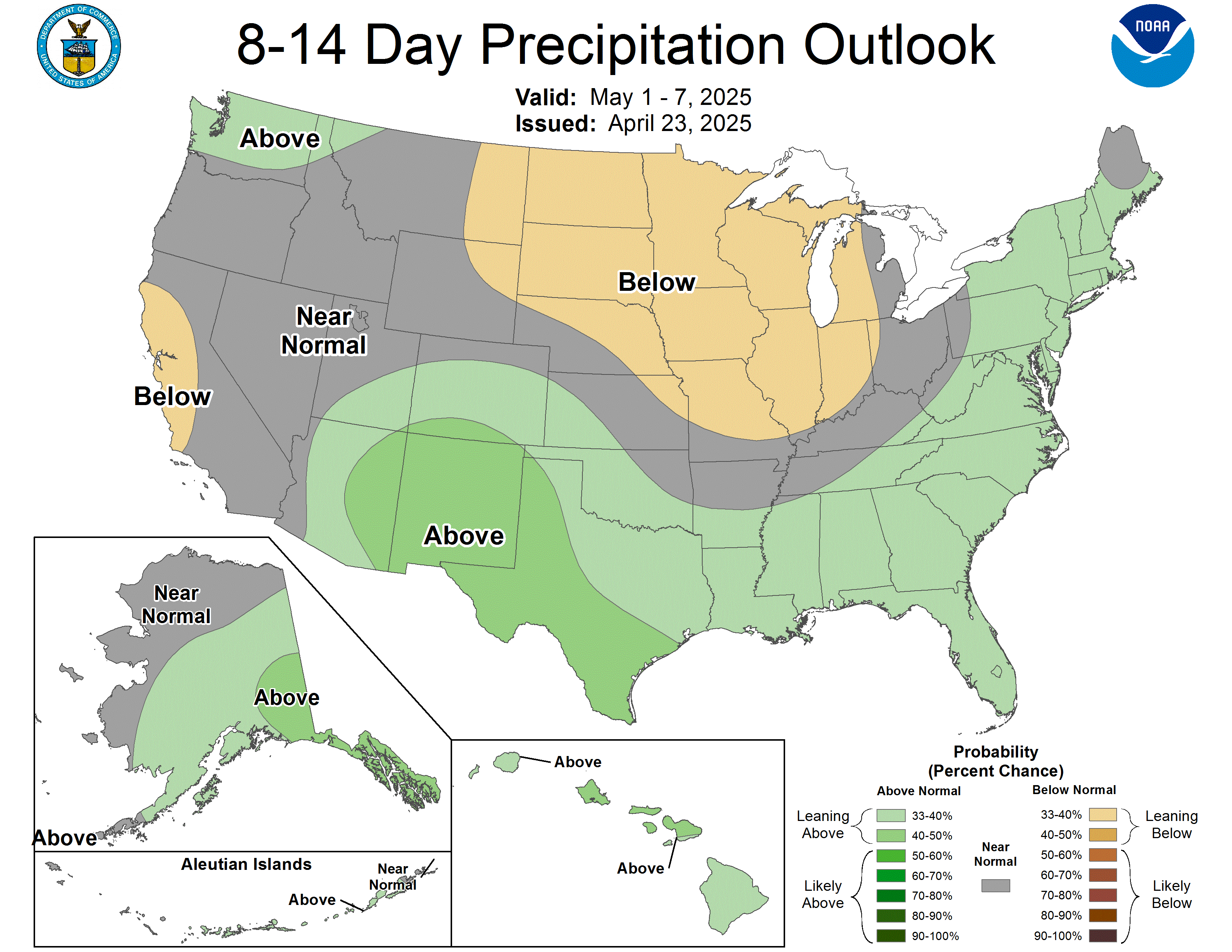
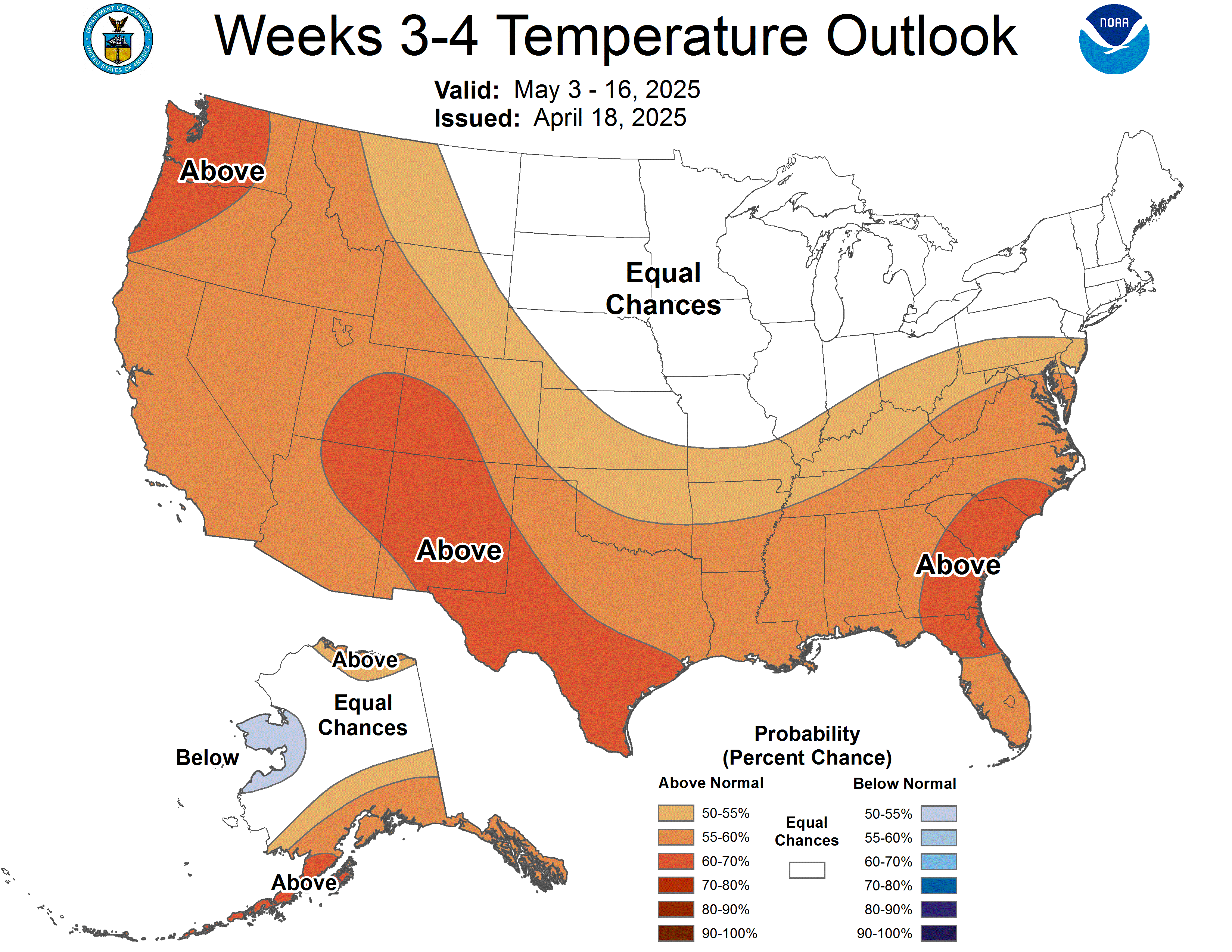
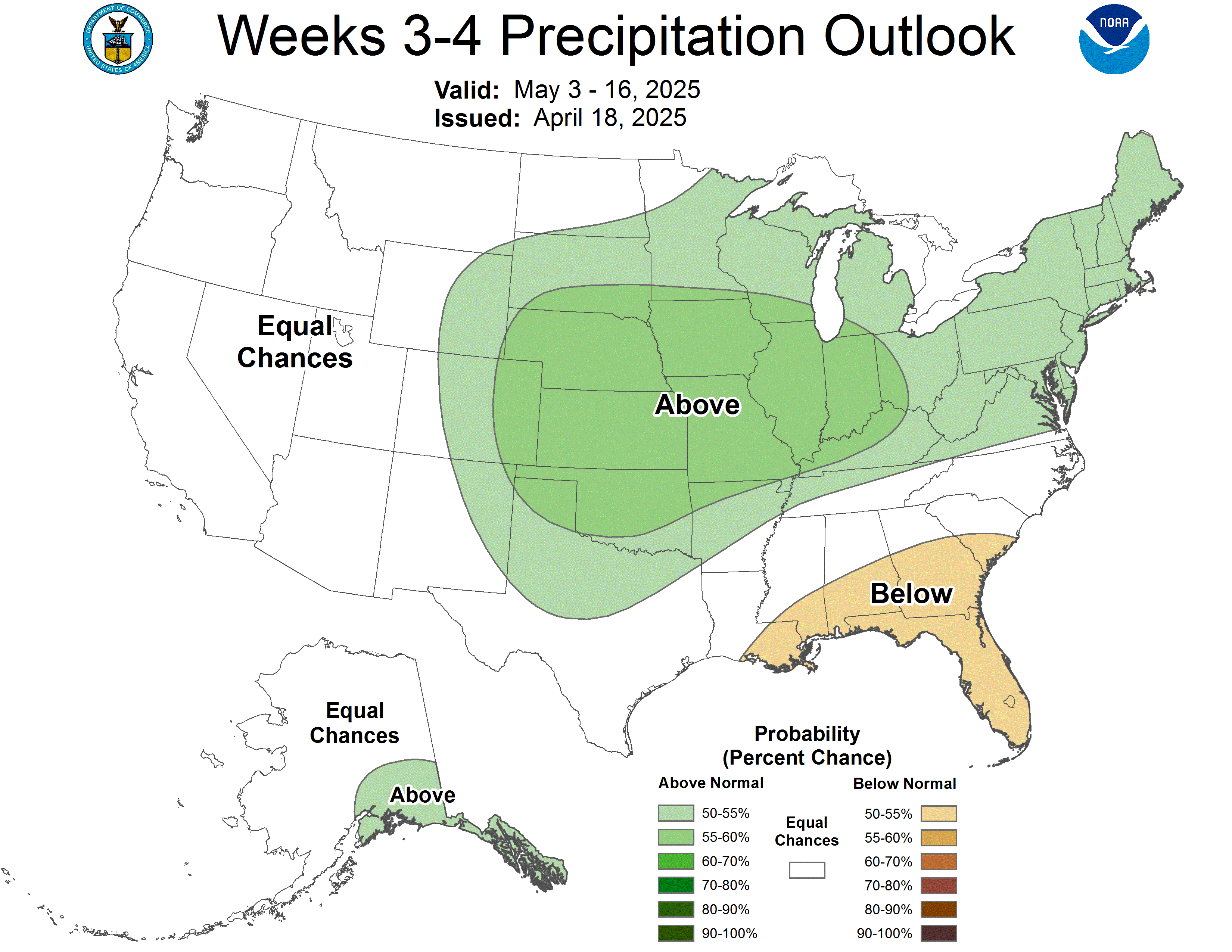
So we had a 28-day outl00k in advance of NOAA issuing their updated outlook for January.
Here are larger versions of the January Temperature and Precipitation Outlook maps.
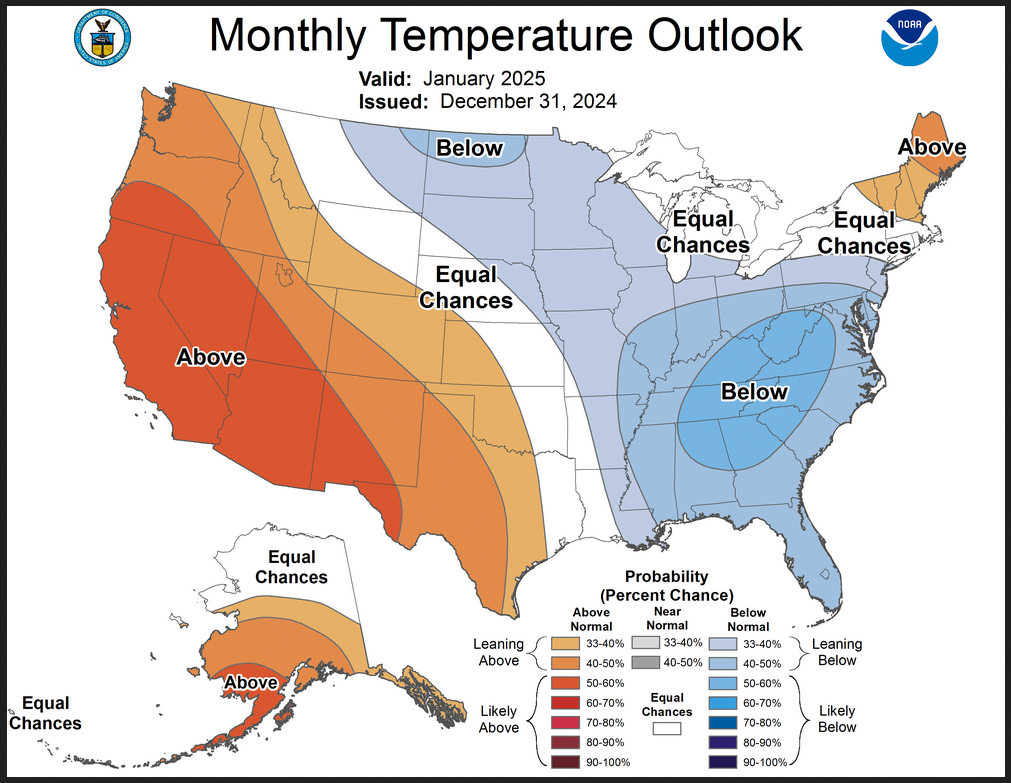
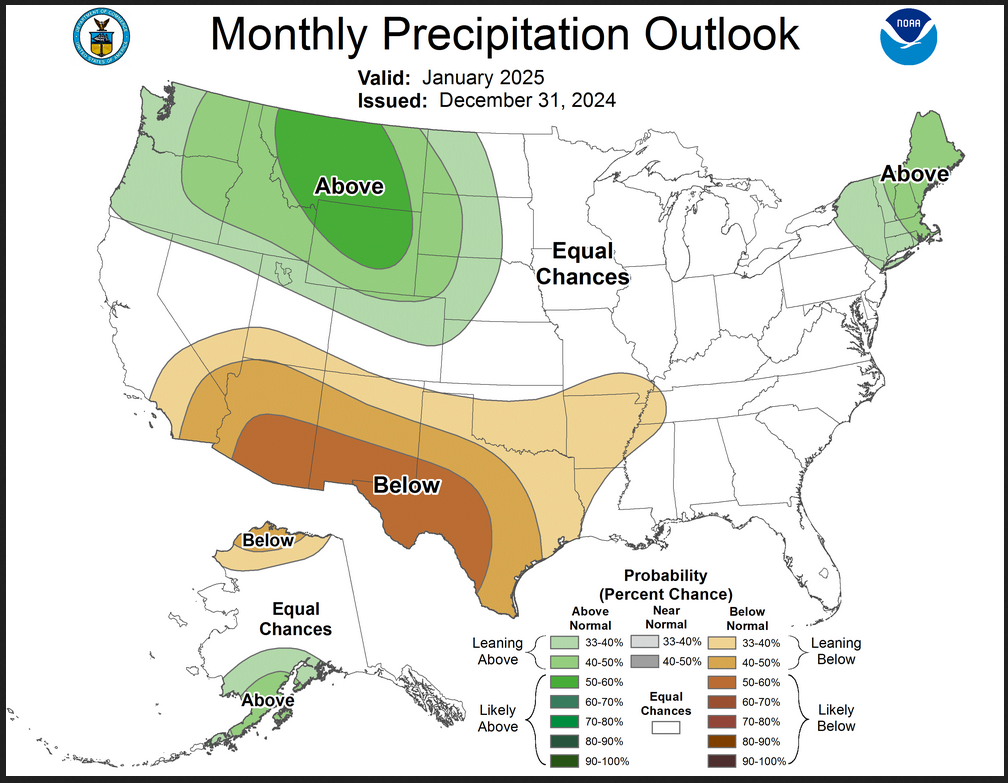
NOAA (Really the National Weather Service Climate Prediction Division CPC) Discussion. I have shown certain important points in bold type. My comments if any are in brackets [ ].
30-DAY OUTLOOK DISCUSSION FOR JANUARY 2025
The January 2025 Monthly Temperature and Precipitation Outlooks are updated with input from the Climate Prediction Center (CPC) Extended Range and Subseasonal Outlooks, dynamical model guidance for week 2 and weeks 3-4, background climate states such as the Madden Julian Oscillation (MJO) and El Niño Southern Oscillation (ENSO), recent Climate Forecast System version 2 (CFSv2) monthly forecasts of temperature and precipitation, and experimental monthly forecasts of temperature and precipitation from extended runs of the Global Ensemble Forecast System version 12 (GEFSv12) and the European Centre for Medium-Range Weather Forecasts (ECMWF) models. ENSO-neutral conditions are currently present, however, equatorial sea surface temperatures (SSTs) are near-to-below average in the central and eastern Pacific Ocean, with the latest weekly Niño3.4 SST departure reaching -1.1 degrees Celsius. While ENSO-neutral conditions are present, these colder SSTs may lead to some La Niña-like impacts in the atmosphere and over the U.S., though the impacts are more likely to be weak and transient compared to those during a stronger La Niña. Perhaps more of a player and in contrast to the previous mid-month discussion, the MJO has become more coherent, and has propagated from the Maritime Continent into the Western Pacific. Dynamical model forecasts of the Realtime Multivariate MJO (RMM) index are in agreement favoring continued eastward progression of the MJO signal over the next two weeks, which typically leads to increased troughing over the central and eastern Contiguous United States (CONUS), consistent with a negative Arctic Oscillation and North Atlantic Oscillation. Overall, the more certain MJO forecasts and subsequent eastern CONUS troughing will allow for the potential for cooler air from the North entering the eastern CONUS during January.
Temperature
Models and teleconnections, particularly the MJO and its potential progression, were more uncertain during the mid-month release of the Monthly Temperature Outlook. As such, the forecast was based mainly on dynamical models such as the North American Multi-Model Ensemble (NMME), the potential for La Niña-like impacts leading to above normal temperatures over much of the southern tier, and the potential for a warm start to January, though we expected a transient pattern throughout the month. Given the uncertainty in models and expected transient pattern a large area of Equal Chances (EC) of above, near, and below normal temperatures was favored for much of the CONUS. Short- (6-10 and 8-14 Day) and long-term (Weeks 3-4) forecasts have come into agreement on a fairly persistent pattern of 500-hPa ridging over the West and troughing over the East. This pattern is expected to begin in early January and persist through near the end of the month, though ECMWF forecasts show some moderation of the pattern by Week 4 (ending January 28th). This persistent pattern is a typical response to the active and forecast MJO, and the troughing will allow for cold air from the North to overspread the eastern CONUS, and as such a swath of below normal temperatures are indicated from the Northern and Central Plains to the Southeast. Probabilities are higher where there is strong model agreement, and aligning with regions where extended range and Weeks 3-4 forecasts favor persistence of the below normal temperatures. Above normal temperatures are favored over the CONUS from the West Coast to the Rockies and extending eastward across much of the Southern Plains and for southern Alaska beneath forecast ridging throughout much of the month of January and where there was strong model agreement. Over Alaska, the above normal temperatures transition to EC over the North where some models favored a weak tilt toward below normal, however, this is highly dependent on the northern extent of the ridge. Interestingly, though we are seeing cooler SSTs in the Niño3.4 region which would typically support below normal temperatures over Alaska, models have and currently favor above normal temperatures. It is possible that Alaska may see these cooler temperatures particularly over the South as the winter season progresses, but have a warm start to the winter. Above normal temperatures are also favored over northern parts of the Northeast ahead of the expected troughing over the East. Finally, EC is indicated over the Great Lakes, much of New York State, and southern New England, given weak or inconsistent model signals.
Precipitation
Despite the forecasted change in pattern for January and changes to the Monthly Temperature Outlook, the Monthly Precipitation Outlook is similar to the prior released version. Recent precipitation forecasts still resemble a La Niña-like response in the models over some of the key teleconnection regions. Above normal precipitation is favored over the Northwest and Northern Plains, which is a hallmark of the winter La Niña teleconnection. Below normal precipitation is favored over the southwestern CONUS to eastern Texas and reaching into parts of the Lower Mississippi Valley, also coincident with a La Niña-like response. On the other hand, precipitation is more uncertain over much of the eastern CONUS than previously indicated in the Monthly Precipitation Outlook. Another La Niña-like teleconnection would be expected to lead to above normal precipitation over the Great Lakes stretching into the Ohio Valley, with below normal precipitation over the Southeast, however, the differences in the atmospheric pattern, MJO, and inconsistencies in model forecasts from run-to-run now support EC over the Great Lakes, much of the East Coast, and Southeast. Above normal precipitation is favored over parts of New England downstream of the forecasted trough. Finally, over Alaska, above normal precipitation is favored over the South transitioning to below normal precipitation over the North, given model agreement.
Drought Outlook
Here is the newly issued Drought Outlook for the month.
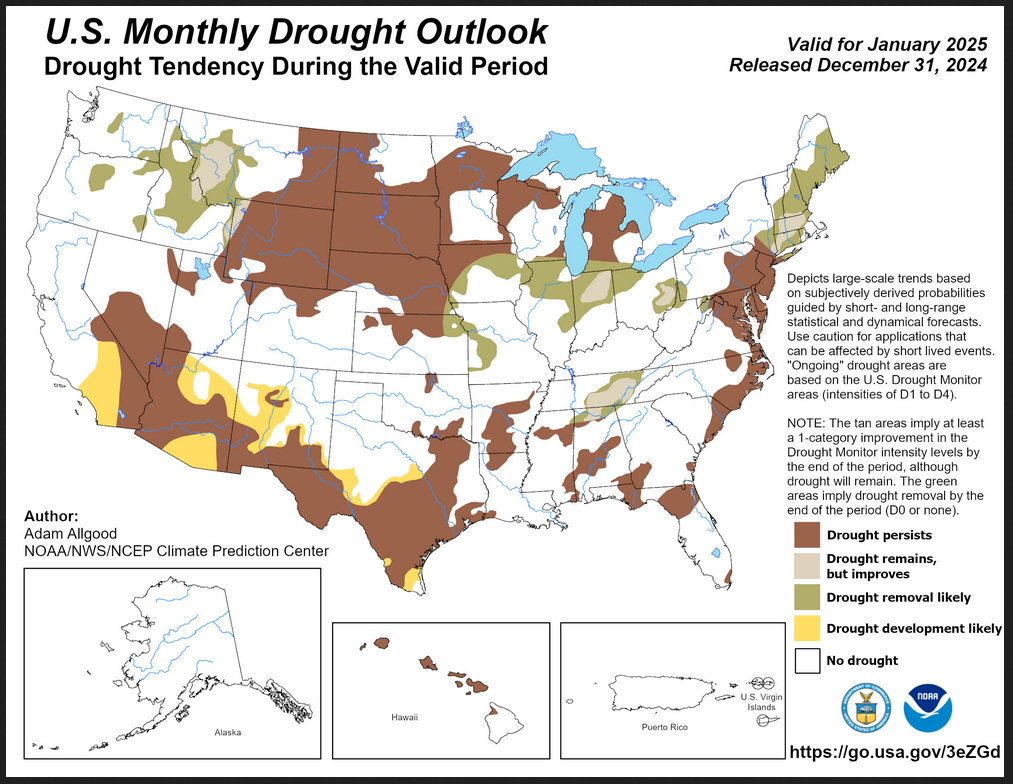
| You can see where drought development or persistence is likely. The summary and detailed discussions that accompany this graphic can be accessed HERE, but the short version is shown below. |
Here is the short version of the drought summary
Latest Monthly Assessment – Frequent storminess across the Northwest helped alleviate drought conditions during the last month. Above-average precipitation was also observed across the far northern tier, and across the central Gulf Coast northeastward into upper New England. The best recharge occurred across the central Appalachians, with regions previously experiencing severe drought in West Virginia now drought free. In contrast, drier conditions prevailed across much of the rest of the US, and drought conditions worsened along portions of the southern tier and the central Rockies.
With La Nina conditions beginning to develop across the equatorial Pacific, reduced southern stream moisture is favored during January, with the revised monthly precipitation outlook from CPC showing increased probabilities for below-average precipitation across the Southwest and south-central CONUS. This favored pattern, in addition to antecedent dryness, favors continued drought expansion across southern California, much of Arizona, and parts of New Mexico and Texas. In contrast, wetter conditions are favored for the Northwest, including the Intermountain West and northern Rockies, which favors continued drought improvements. A pattern shift towards colder conditions for the central and eastern US is also favored during January, which should reduce evapotranspirative demand across the Southeast, and may allow any storm systems to boost snowpack coverage across the northeastern quadrant of the CONUS. Short term forecasts for widespread rainfall across the Ohio River Valley and New England indicate the areas with best opportunities for recharge and further drought reduction. A drier climatology favors persistence across much of the Plains, while more entrenched drought impacts coupled with reduced opportunities for widespread precipitation favors persistence across the mid-Atlantic and Southeast.
No drought conditions are currently present or forecast to develop during January across Alaska, Puerto Rico, and the US Virgin Islands. Drought conditions have slowly expanded across Hawaii, and precipitation during January is unlikely to significantly reduce these impacts.
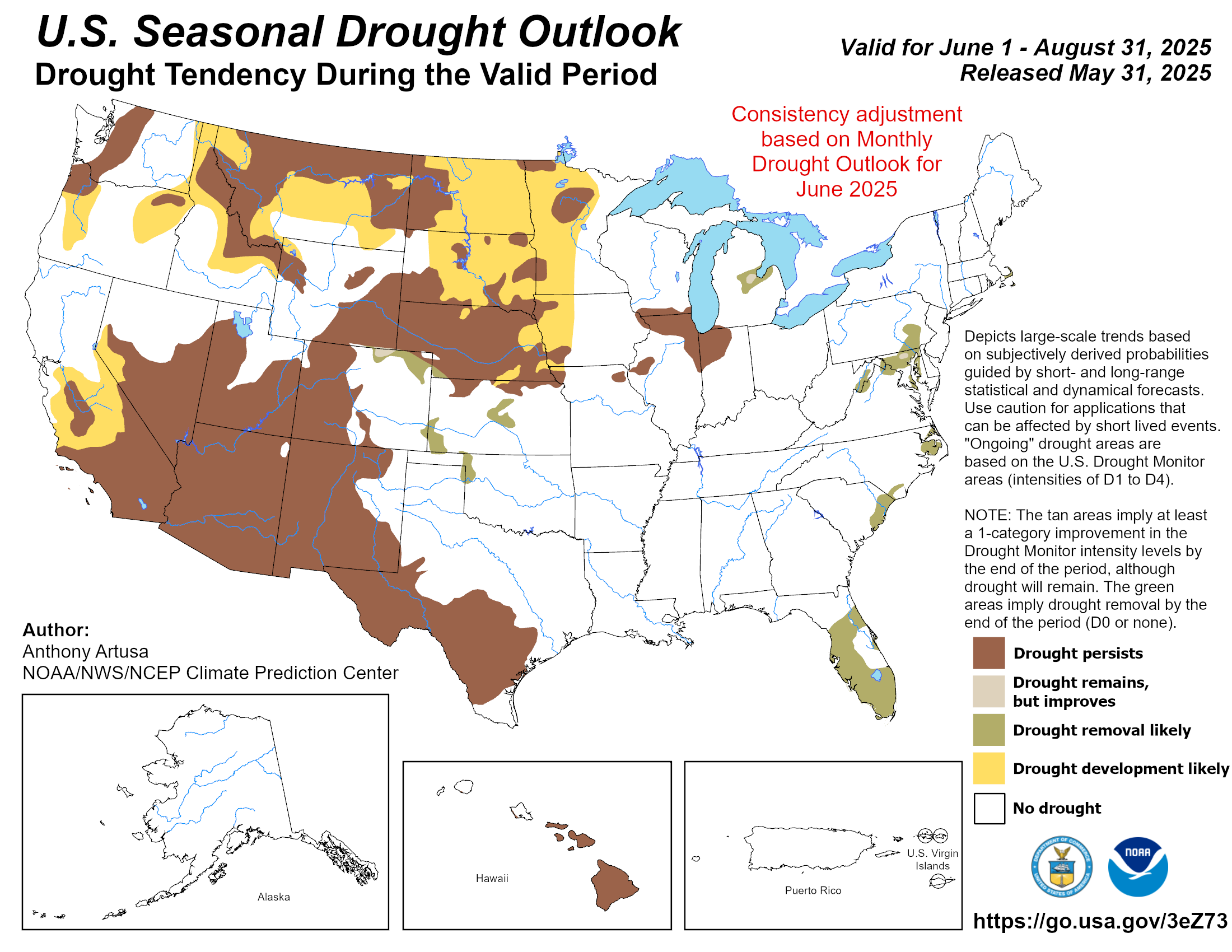
We also have an updated Seasonal Drought Outlook (link).
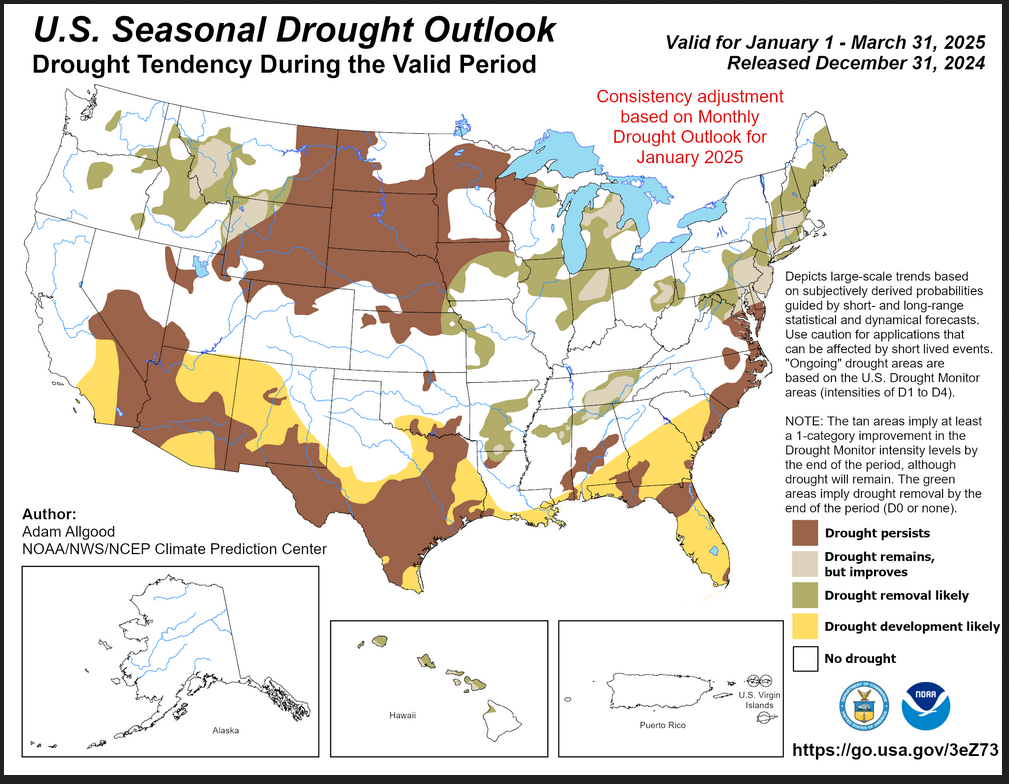
| This three-month outlook forecast is a combination of the mid-month three-month drought forecast and the revised drought forecast for January. Since I have a low level of confidence in the NOAA Outlooks for February and March, I have a somewhat low level of confidence for this seasonal drought outlook. |
| To update this forecast (which updates on Tuesdays), click HERE |
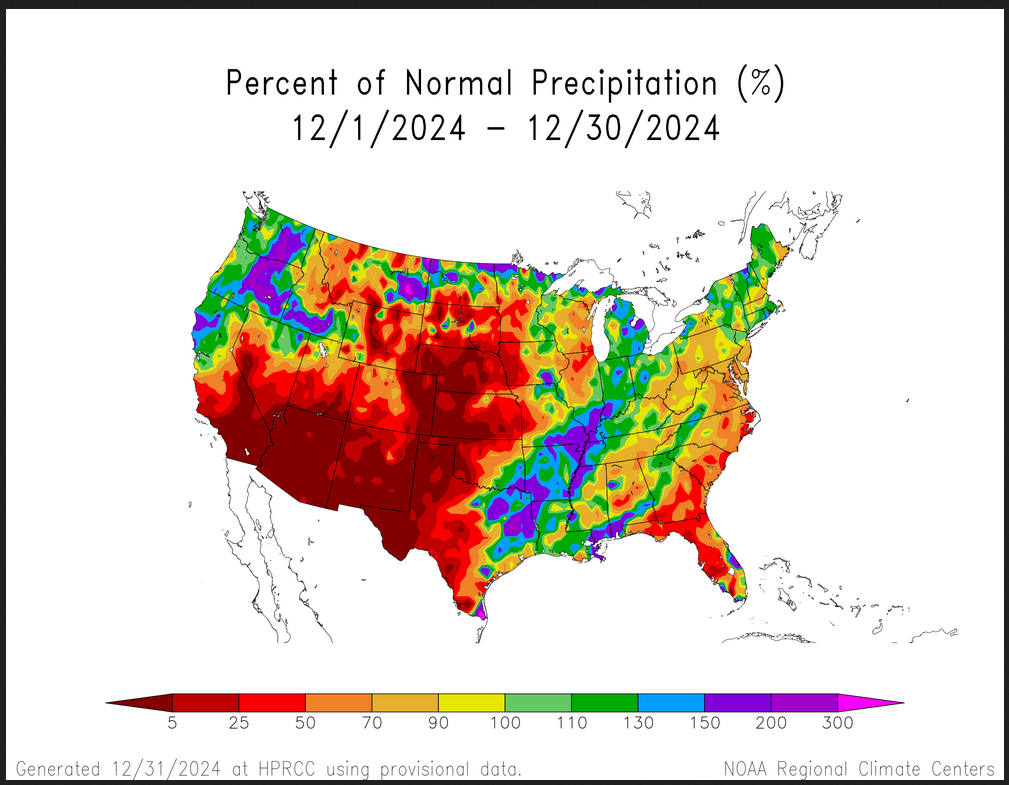
It is useful to review the prior month.
Month-to-date Temperature as the current month evolves can be found at https://hprcc.unl.edu/products/maps/acis/MonthTDeptUS.png
Month-to-date Precipitation as the current month evolves can be found at https://hprcc.unl.edu/products/maps/acis/MonthPNormUS.png
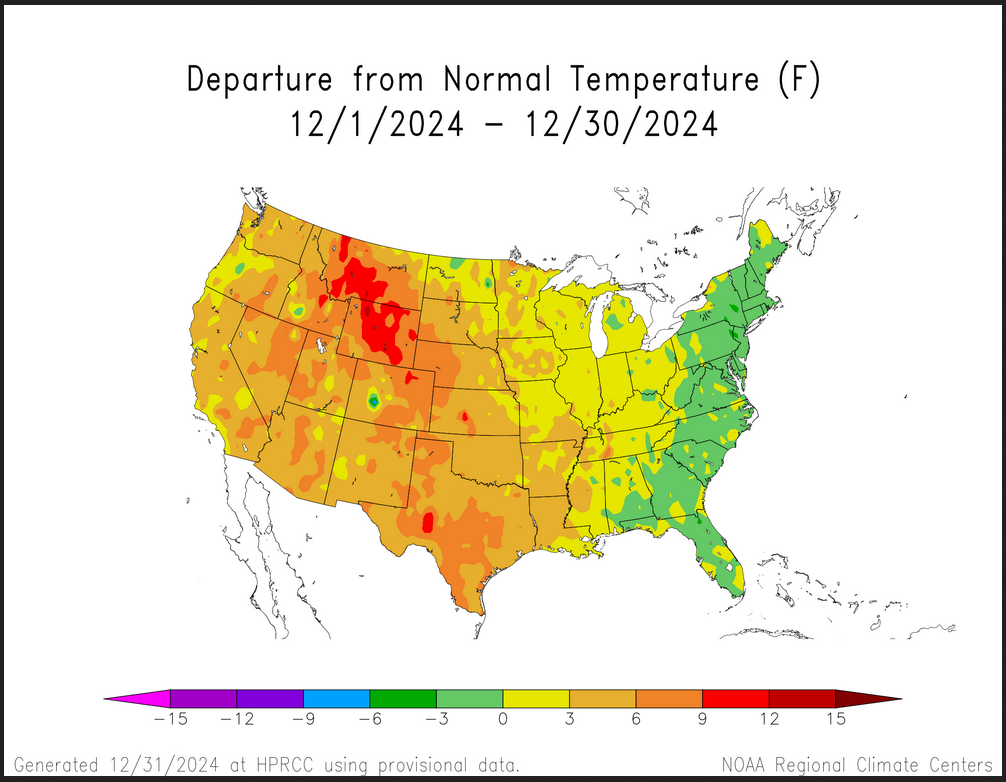
| You see an interesting West to East pattern of warm and cool with respect to a normal December. It is similar to November. |
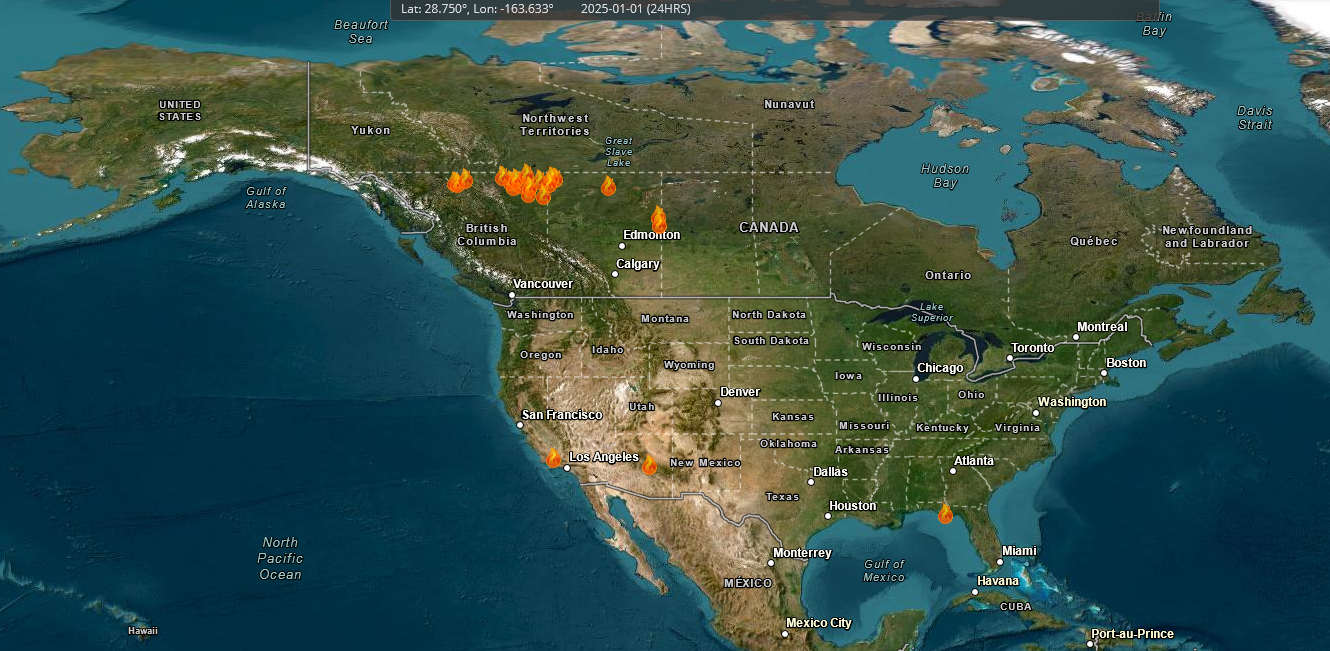
| But they for sure have good-looking maps. I will try to provide more information on the use of this website in the future. Canada has the major wildfire problem right now. |
| I hope you found this article interesting and useful |