Every year at about the same time, there is a report on the State of the Climate of the world as of the prior year. Many organizations work together to produce and distribute this report. I am presenting the NCEI-prepared highlights of the full report. Remember this report is about 2022 and the years leading up to 2022. It takes a little time for NOAA and the American Meteorological Society to prepare their report and in this article, I provide the Highlights of that report as prepared by NCEI. NCEI stands for the NOAA National Centers for Environmental Information.
This article is worth reading. It just presents the highlights. My comments are inside boxes within the article.


| This report can be accessed HERE but I have included all of the material that is in this report in this article. |

| The American Meteorological Society (AMS) version of the report has a lot more detail and can be accessed HERE. |

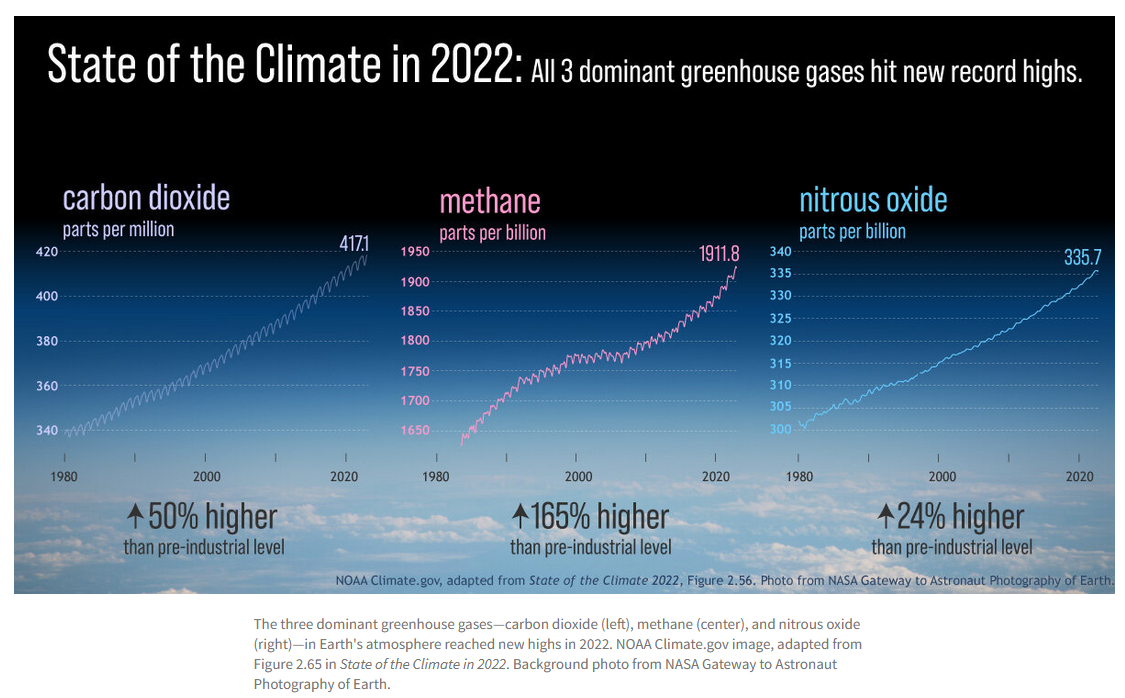
| The growth in all three greenhouse gases since 1980 is bad but the increase in methane is particularly concerning. |
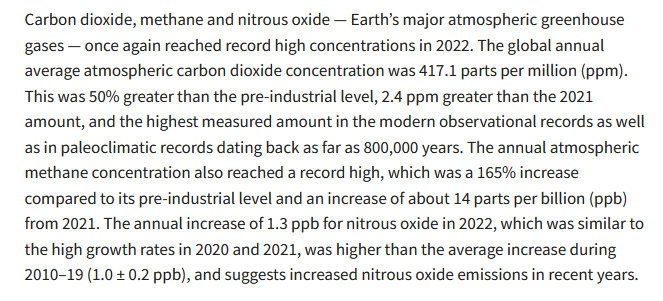
| Nitrous oxide is a very very powerful GHG so its increase in growth rather is very concerning. |
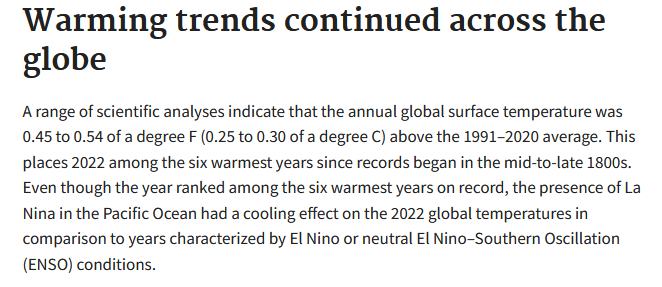
| In general, we expect El Nino years to show larger increases in temperature than La Nina years. |
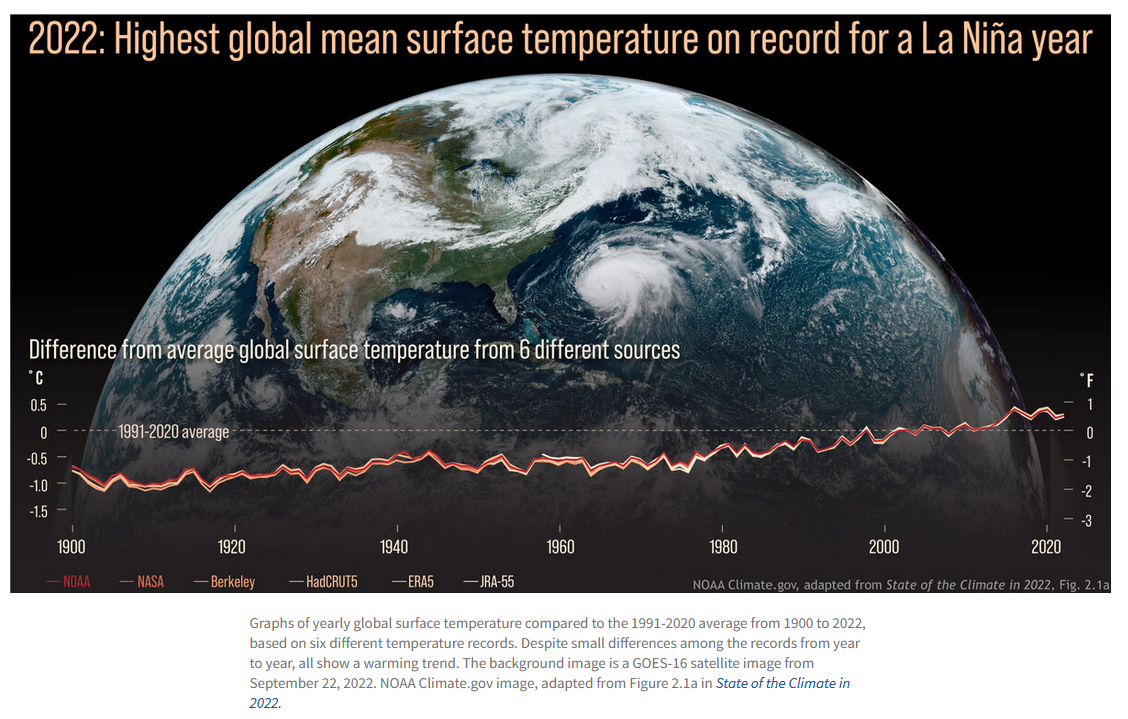
| We see the trend. This chart also tries to show the twin peaks in recent years and the legend provides additional information. |
| All of the above is concerning. |
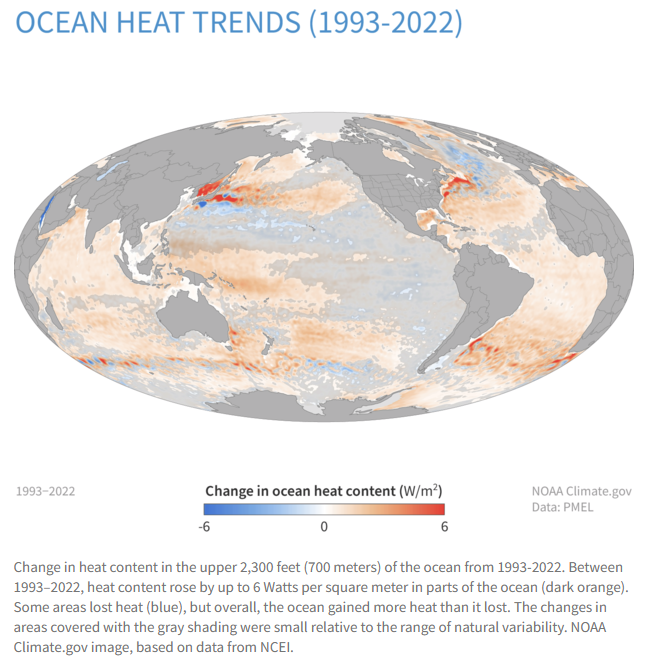
| The pattern is interesting. |
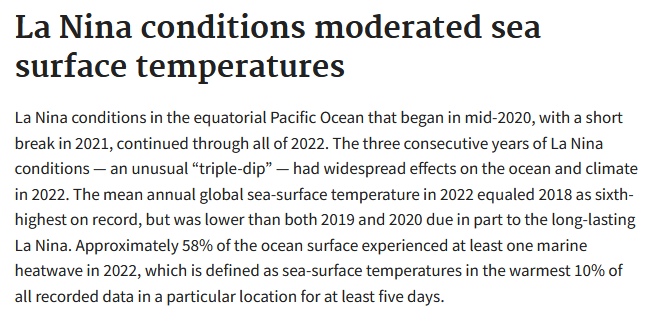
| Yes, La Nina concentrates the warming of the sea surface to certain areas one of which is the Indo-Pacific Warm Pool due to the strong Equatorial Easterlies associated with La Nina. The pattern is very different from the earlier graphic. |
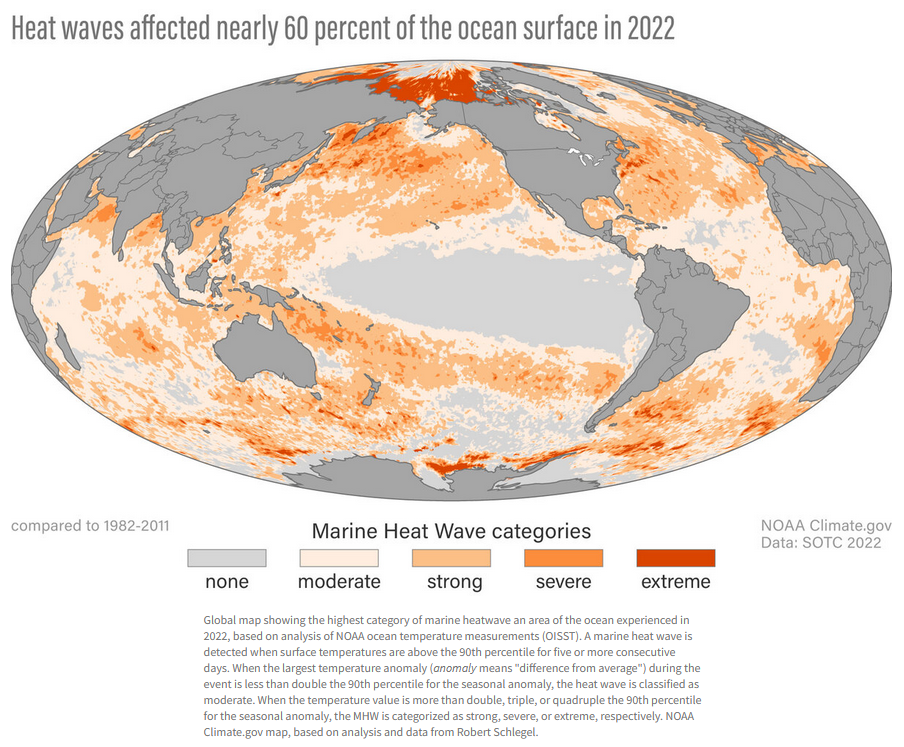
| Unlike the graphic above this shows sea surface temperatures rather than the warming of sea water at all depths. |
| This is talking about 2022. 2023 has been worse. |
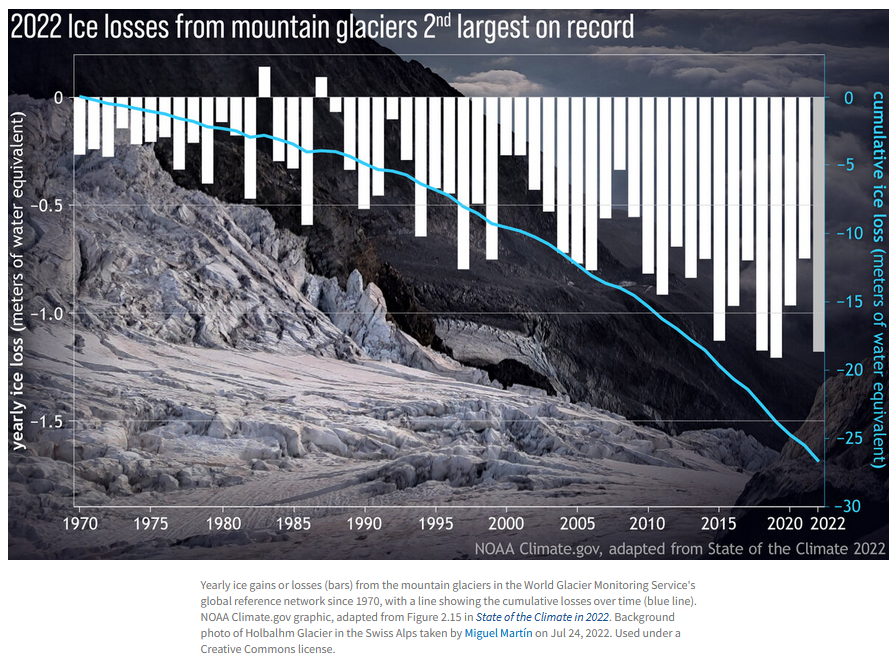
| This shows the annual and cumulative sea ice losses. |
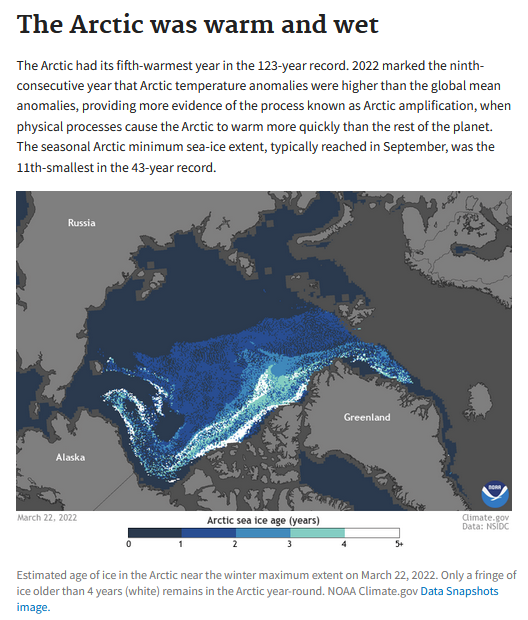
| I am not sure that 2022 was particularly different from recent years. |
| This undersea eruption was unusual but we still do not understand the impacts. |
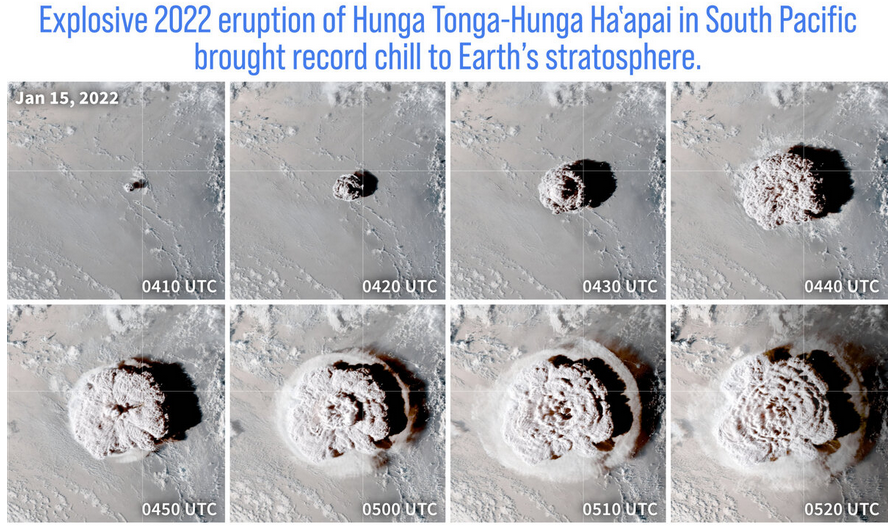
| Impressive |
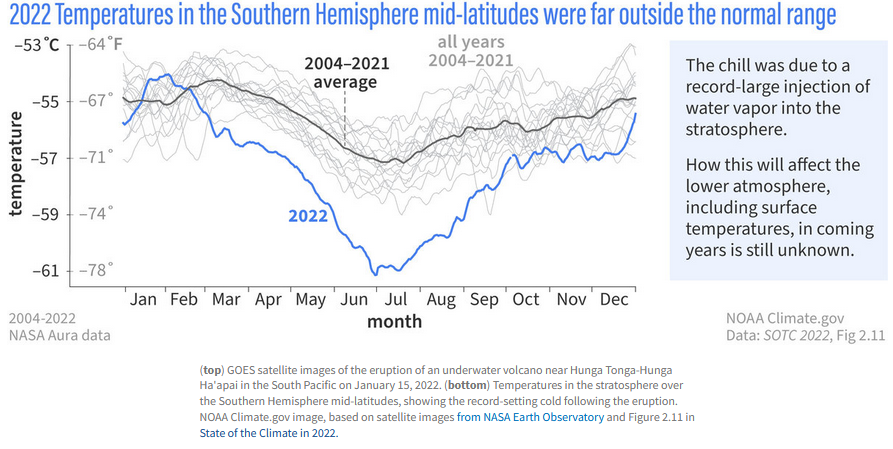
| This is pretty dramatic. Not everyone agrees with what the impacts will be. Remember this graphic shows 2022 and we now have data through August of 2023. |
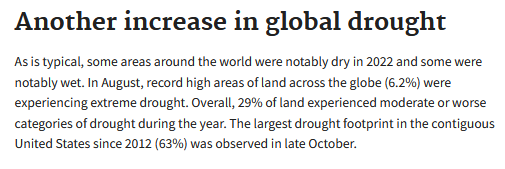
| A graphic of drought by year would have been helpful and I am sure they included it in the AMS report. Remember this report is a summary report. |
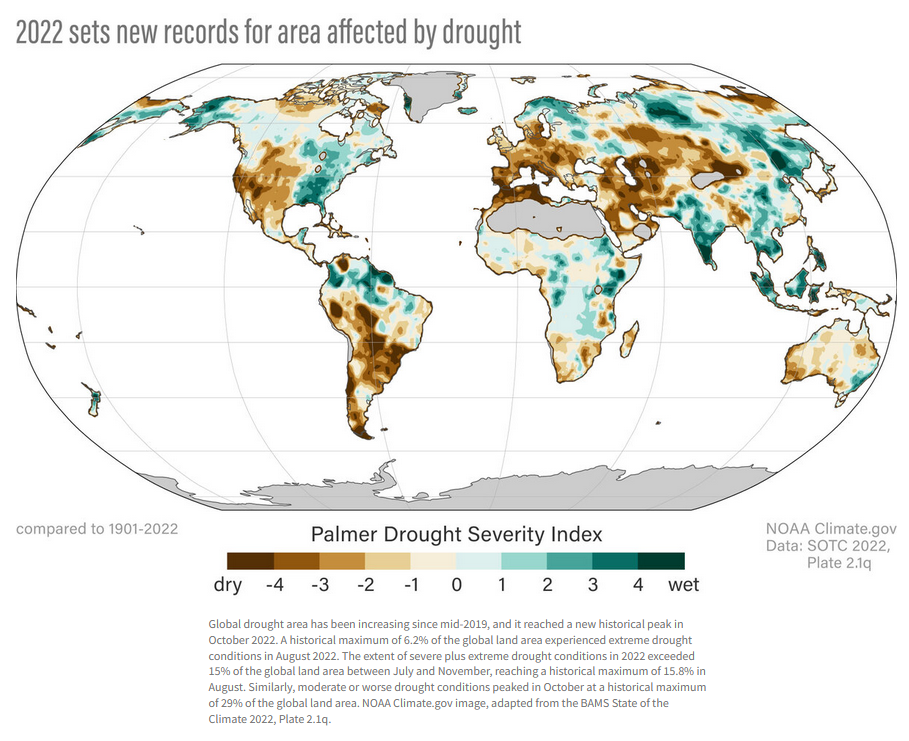
| And 2023 may have been a worse year to date..not sure. |
| The NCEI’s very condensed summary of what I have shown in this article can be accessed HERE. It contains an additional useful graphic. |
–
| I hope you found this article interesting and valuable. |
–
These links have already been provided by I have them here so that I can check them tomorrow to be sure I have them correct in the article.
https://www.climate.gov/news-features/understanding-climate/highlights-state-climate-2022
https://www.ncei.noaa.gov/news/reporting-state-climate-2022
https://www.ametsoc.org/index.cfm/ams/publications/bulletin-of-the-american-meteorological-society-bams/state-of-the-climate/
