Here is what we are paying attention to this morning and the next 48 hours from this evening’s NWS Forecast.
...Tropical Cyclone NICOLE will slowly weaken and move northward, becoming
Post-Tropical by Friday evening...

...Heavy snow is to begin to wind down over the Upper Midwest on Friday...

...There is a Slight Risk of severe thunderstorms over parts of the
Southeast through Saturday morning...

...There is a Slight Risk of excessive rainfall over parts of the
Southeast on Thursday, moving to the Northeast on Friday...

Continuation of the NWS Short Range Forecast (It is updated twice a day and these updates can be found here.
Tropical Cyclone NICOLE will slowly weaken and move northward, becoming
Post-Tropical by Friday evening over the Southern Appalachians. However,
the storm will produce heavy rain, strong wind, severe weather, and storm
surge overnight Thursday into Friday.

Nicole will produce heavy rainfall across the Florida Peninsula. As a
result, flash and urban flooding will be possible across portions of the
Florida Peninsula, along with renewed river flooding on the St. Johns
River. Isolated flash, urban, and small stream flooding will also be
possible on Friday in the Southeast through the Central Appalachians,
including the Blue Ridge Mountains, and extending northward through
eastern Ohio, west-central Pennsylvania, into western New York by Friday
night into Saturday.

Due to the threat of severe weather, the SPC has issued a Slight Risk of
severe thunderstorms over parts of the Southeast Coast through Friday
morning. The hazards associated with these thunderstorms are some
lightning, severe thunderstorm wind gusts, a few tornadoes, and a minimal
threat of hail. Furthermore, due to the heavy rain associated with NICOLE,
the WPC has issued a Slight Risk of excessive rainfall over the Southeast
through Friday morning. The associated heavy rain will create mainly
localized areas of flash flooding, with urban areas, roads, and small
streams the most vulnerable.

On Friday, as NICOLE moves northward, the threat of severe weather and
excessive rainfall moves northward. Therefore, the SPC has issued a Slight
Risk of severe thunderstorms from parts of the Mid-Atlantic from Friday
into Saturday morning. The hazards associated with these thunderstorms are
frequent lightning, severe thunderstorm wind gusts, a few tornadoes, and a
minimal threat of hail.

Additionally, the WPC has issued a Slight Risk of excessive rainfall over
the Northeast/Ohio Valley and the Central/Southern Appalachians from
Friday to Saturday morning. The associated heavy rain will create mainly
localized areas of flash flooding, with urban areas, roads, and small
streams the most vulnerable. On Saturday, the threat of severe weather and
excessive rainfall weakens significantly and moves northward to New
England.

Meanwhile, heavy snow over the Northern Plains will start to weaken from
overnight Thursday into Friday. Lighter amounts of snow will fall over the
Upper Great Lakes on Friday into Saturday morning. The ongoing winter
storm will continue to produce heavy snow and an area of sleet and
freezing rain over portions of North Dakota and northern Minnesota through
early Friday. Heavy snowfall rates of 1-2 inches per hour are possible
this evening from northeastern North Dakota into northwestern Minnesota.
Total snowfall will exceed 12 inches in some areas. Blizzard conditions
across portions of North Dakota and northwestern Minnesota will continue
overnight due to strong winds and reduced visibility from blowing snow.
Travel may be dangerous in some areas and scattered power outages are
possible. Additional freezing rain and sleet to the south of the heaviest
snow may produce areas of icing. Snow, freezing rain, and sleet may result
in areas of hazardous travel and some disruptions to infrastructure.
Strong northeasterly winds over western Lake Superior may lead to
hazardous waves.
Current forecast of heavy precipitation (Updates can be found HERE)
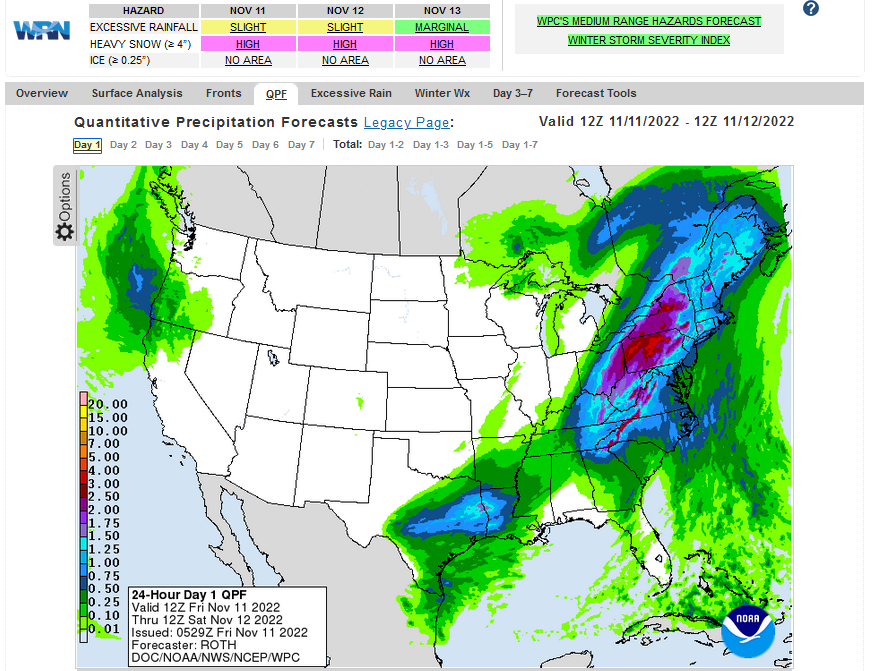
Maps that relate the forecast to geography can be found by clicking Here for Day 1 and Here for Day 2.
Here is a 60-hour animated forecast map that shows how the short-term forecast is expected to play out
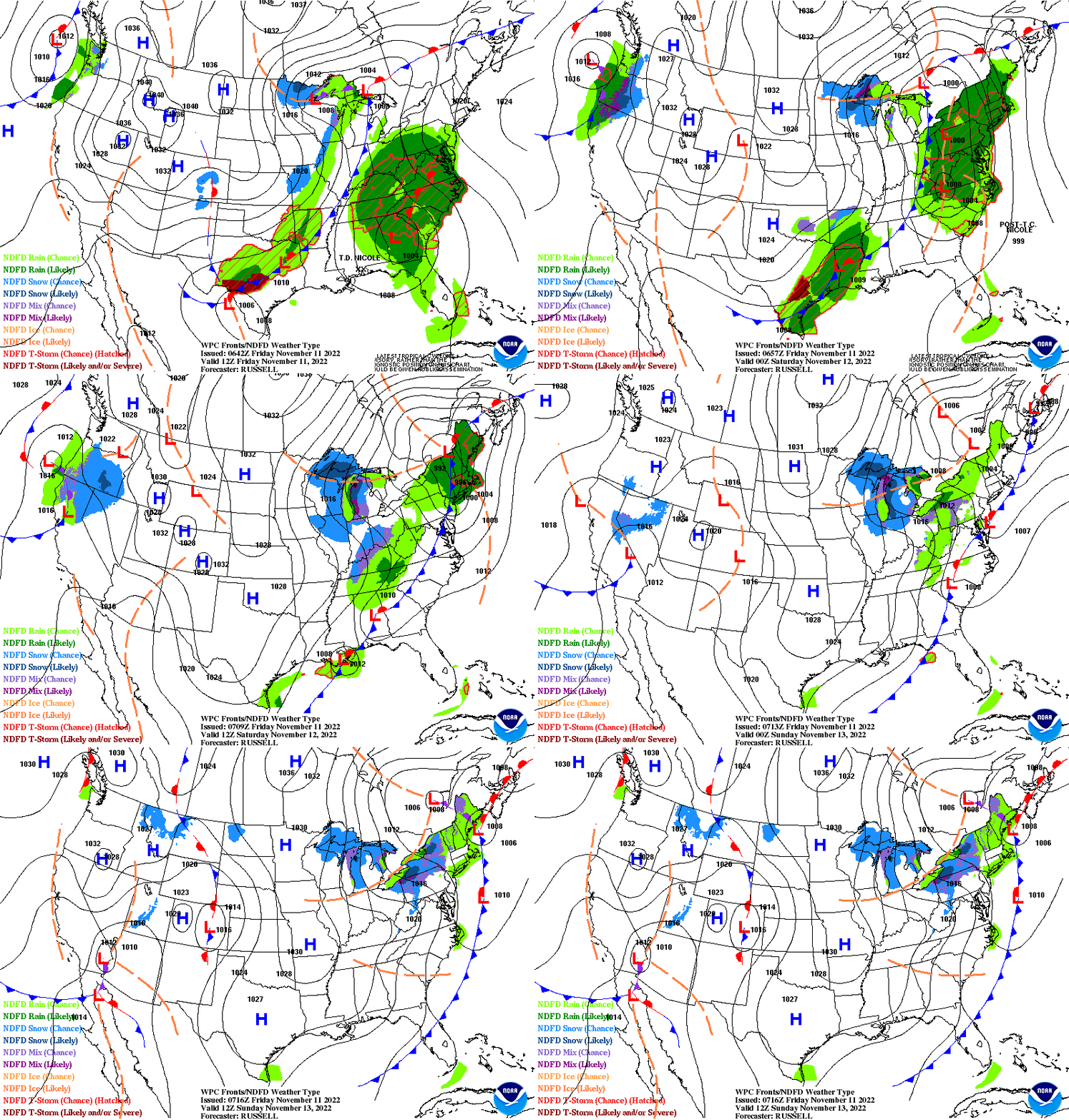
If it needs to be updated click here.
ATMOSPHERIC RIVERS
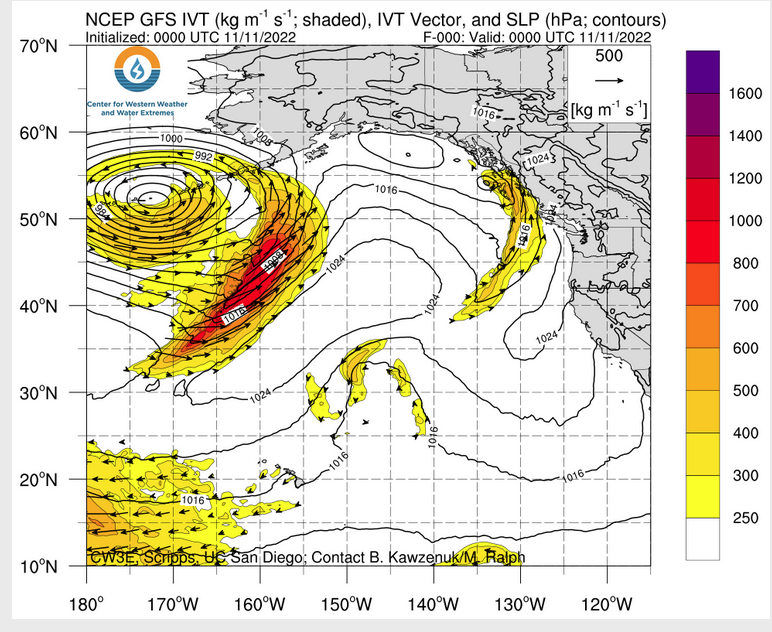 Click HERE to update. Here is some useful information about Atmospheric Rivers.
HAZARDS OUTLOOKS
Click here for the latest complete Day 3 -7 Hazards forecast which updates only on weekdays. Once a week probably Monday or Tuesday I will update the images. I provided the link for readers to get daily updates on weekdays. Use your own judgment to decide if you need to update these images.
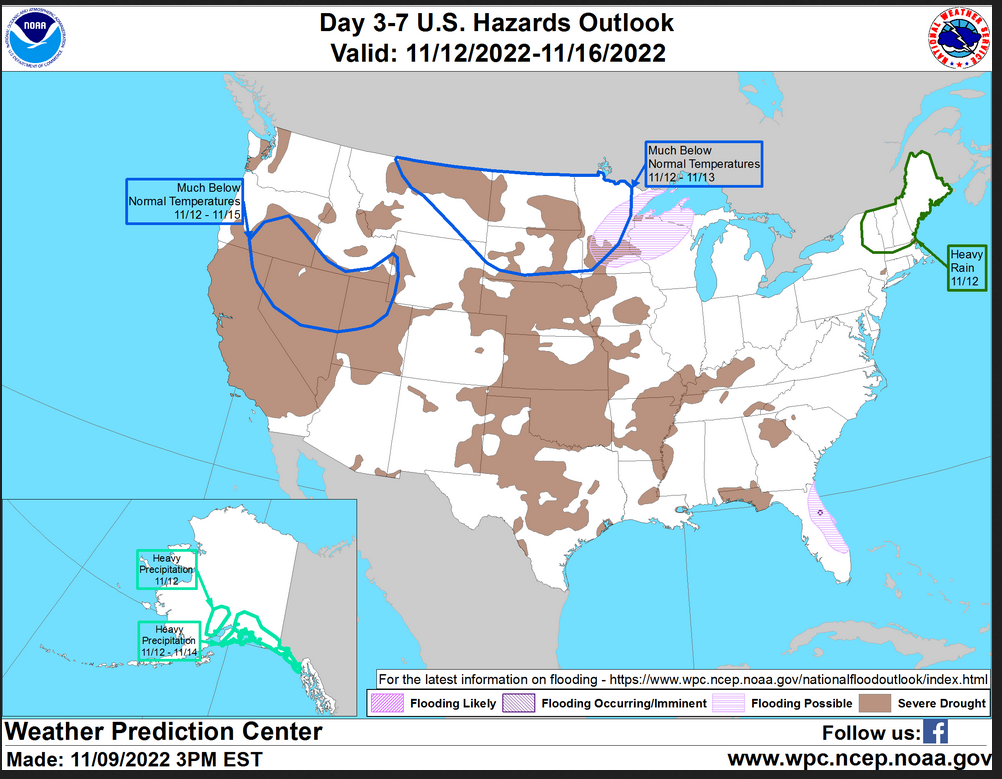
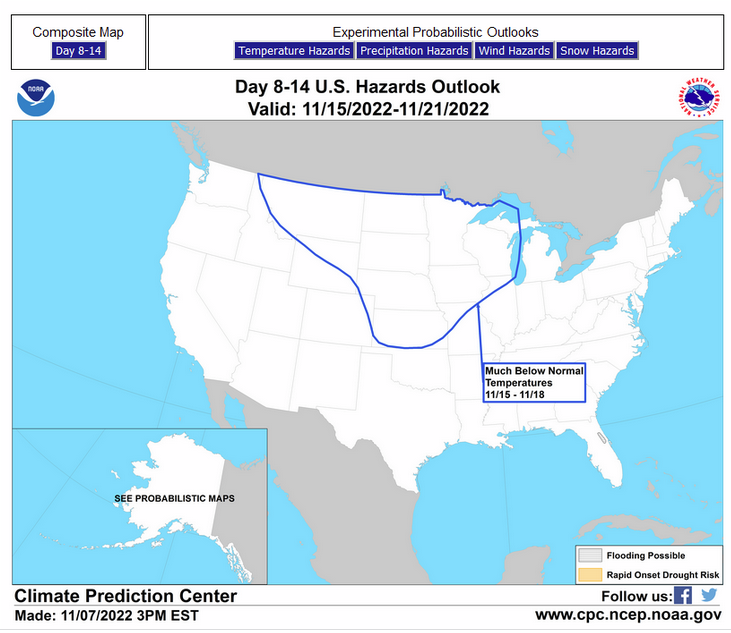
Worldwide Tropical Forecast
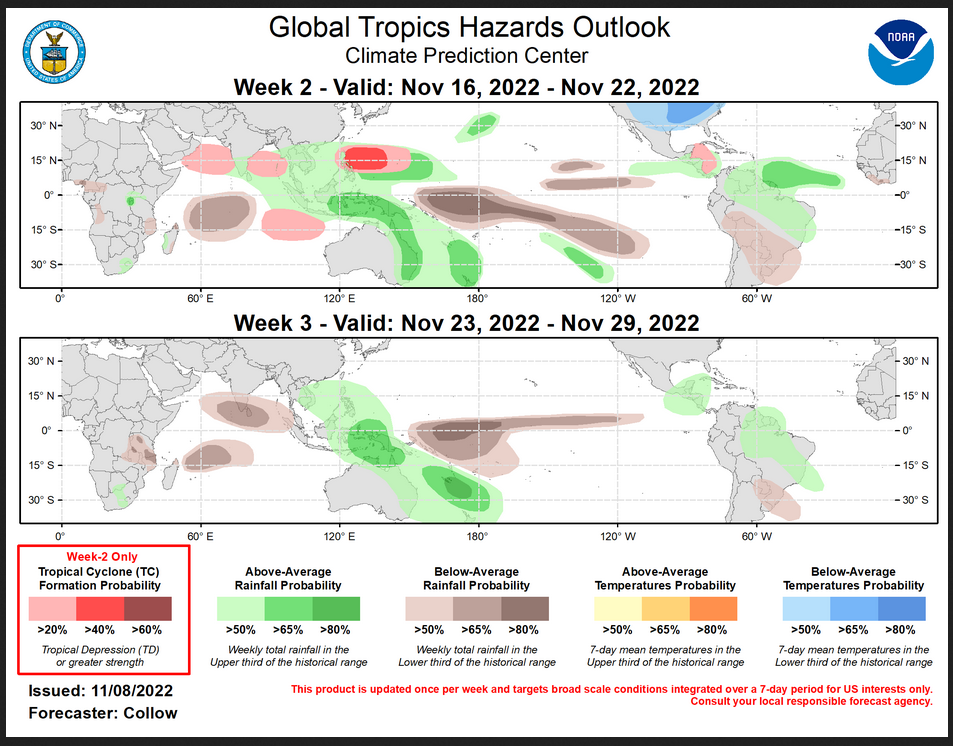
(This graphic updates on Tuesdays) If it has not been updated, you can get the update by clicking here This is a new approach and covers weeks 2 and 3 not weeks 1 and 2. It has more information but I am having trouble getting used to it. As usual, it comes with a discussion which is below
Detailed Maps and Reports for the Western Atlantic and the Pacific Oceans
Below are four maps that summarize the situation for the Atlantic, Eastern, Central Pacific, and Western Pacific. Additional information can be accessed by clicking HERE
First the Atlantic
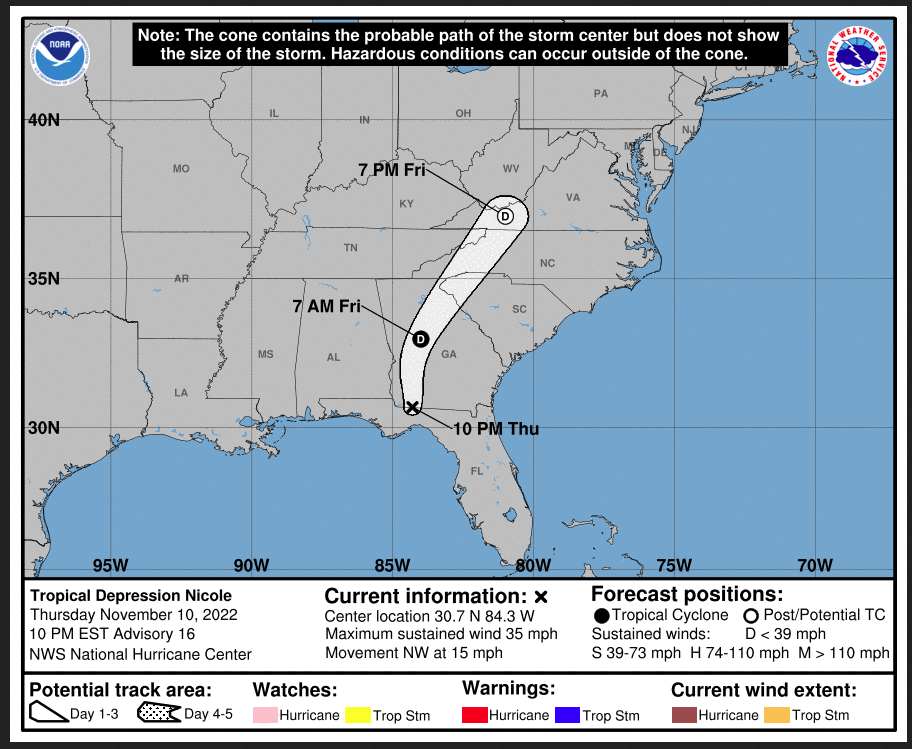
Click to view the forecast map and have access to additional information https://www.nhc .noaa.gov/gtwo.php?basin= atlc&fdays=5
Then Eastern Pacific
Click to view the forecast map and have access to additional information https://www.nhc.noaa.gov/gtwo.php?basin=epac&fdays=5
Then Central Pacific
Click to view the forecast map and have access to additional information https://www.nhc.noaa.gov/gtwo.php?basin=cpac&fdays=5
And the Western Pacific
Click to view the forecast map and have access to additional information https://www.metoc.navy.mil/jtwc/jtwc.html
Some Intermediate-Term Outlooks
Links to “Outlook” maps and discussions for three time periods. Days 6 – 10, Days 8 – 14, and Weeks 3 and 4. An outlook differs from a forecast based on how NOAA uses these terms in that an “outlook” presents information from deviation from normal and the likelihood of these deviations.
You have to click on the links because they do not update automatically and I do not want to have stale images in the article. But it is not difficult to click on a link and you get a large image plus a discussion. On Fridays in a separate article, we will show the images and provide a link in this article that article. But remember what you will see is the images as of Friday. But here you can get the current images simply by clicking on them. Then hit the return arrow at the upper left of your screen to return to the article. You will not find this information easily anywhere else.

Right now you can find these maps here (We show them every Friday there but you can click above and find them).
Worldwide Weather
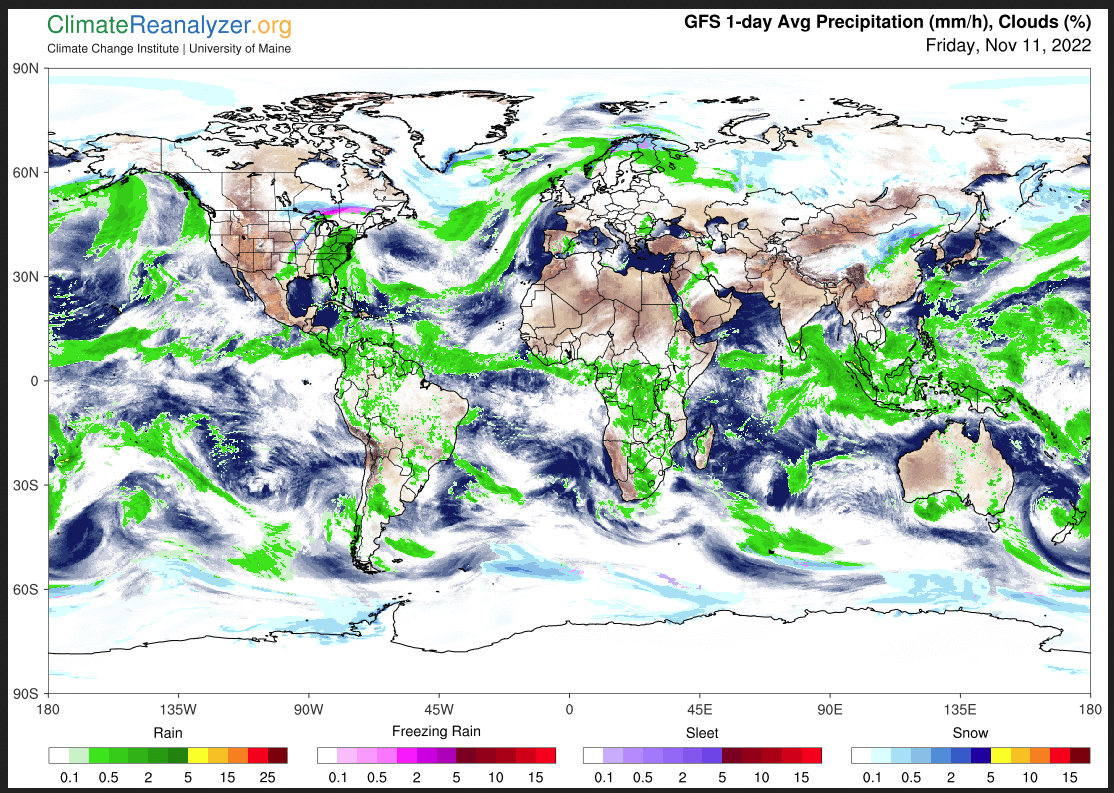
Below is the current or short-term precipitation forecast which can be updated by clicking HERE Additional maps can be obtained H ERE.
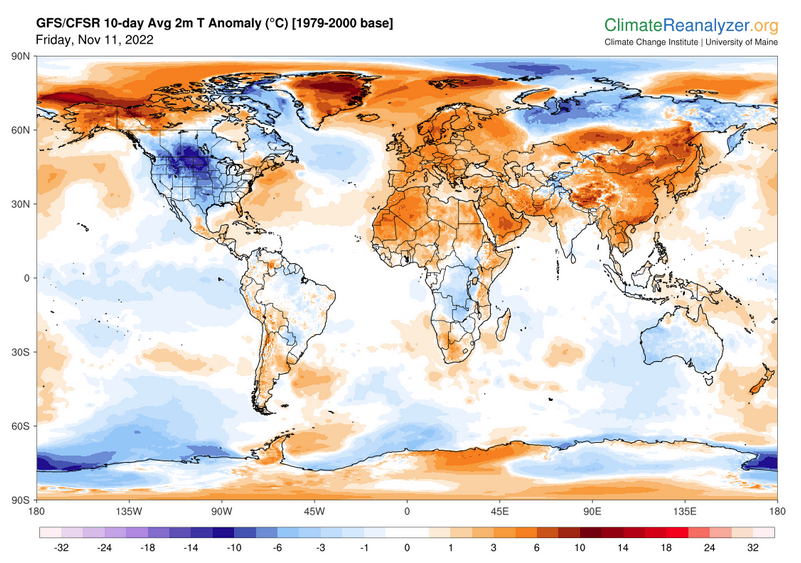
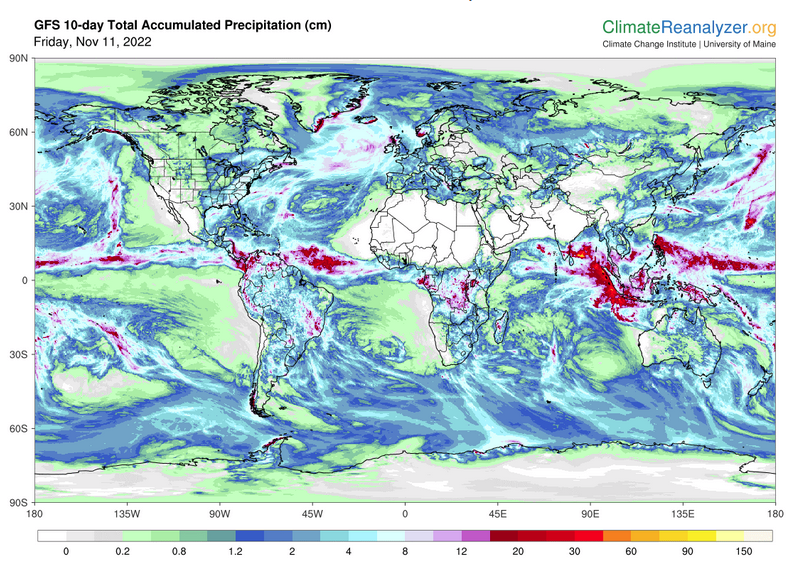
Month to Date Information
Month to date Temperature can be found at https://hprcc.unl.edu/products/maps/acis/MonthTDeptUS.png
Month to date Precipitation can be found at https://hprcc.unl.edu/products/maps/acis/MonthPNormUS.png