Updated at 1 pm EDT on September 9, 2022 to reflect updated information on now Tropical Storm Kay
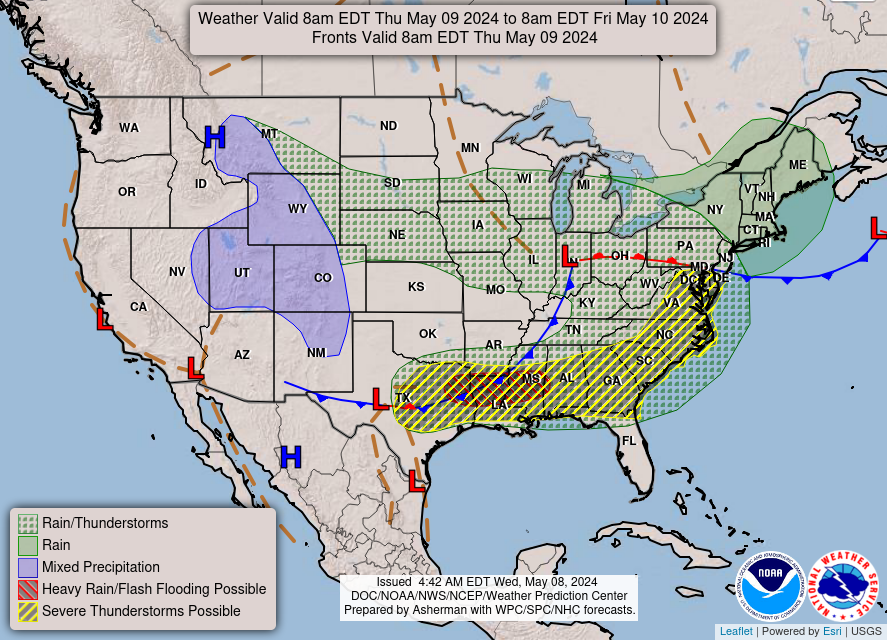
Here is what we are paying attention to this evening and the next 48 hours from this afternoon’s NWS Forecast.
...Hazardous weather associated with Hurricane Kay to begin entering
southern California and parts of the Desert Southwest on Friday...

...Dangerous heat continues throughout central and northern California
through the end of the week, with well above average temperatures building
into the Pacific Northwest by the weekend...

...Powerful cold front will usher in much below-average temperatures for
the Intermountain West, Plains and Midwest this weekend...

...Unsettled weather and flash flood chances forecast over parts of the
Southeast and eastern Gulf Coast..

Continuation of the NWS Short Range Forecast (It is updated twice a day and these updates can be found here.
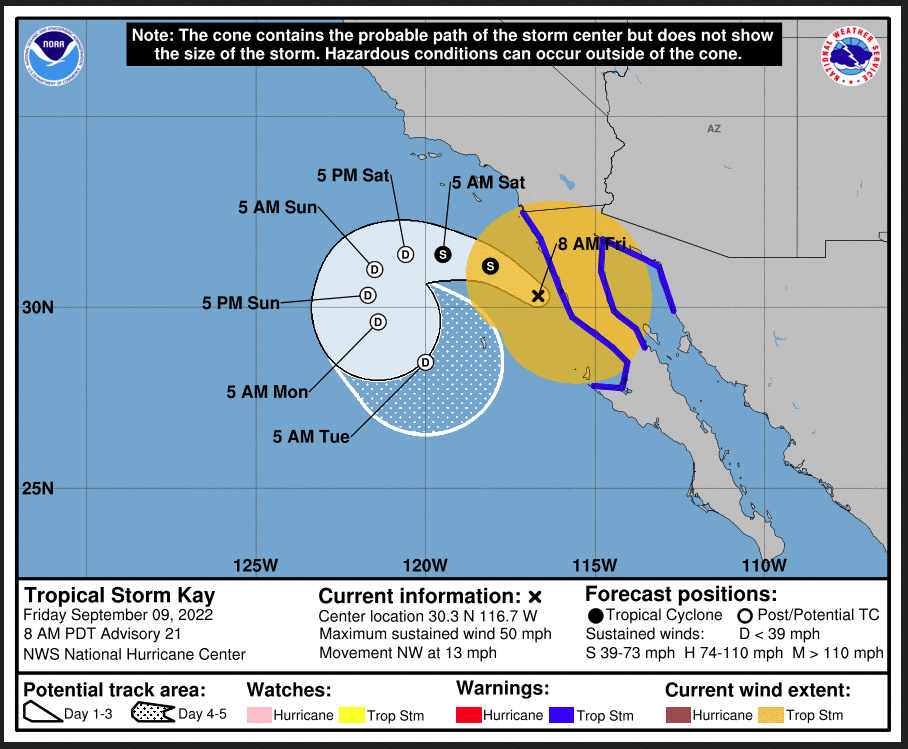
Hurricane Kay continues its northward progression, parallel to coastal
stretches of Baja California, before being forecast to make a westward
curve away from southern California due to the impressive upper-level
ridge currently bringing record-breaking temperatures to the region.
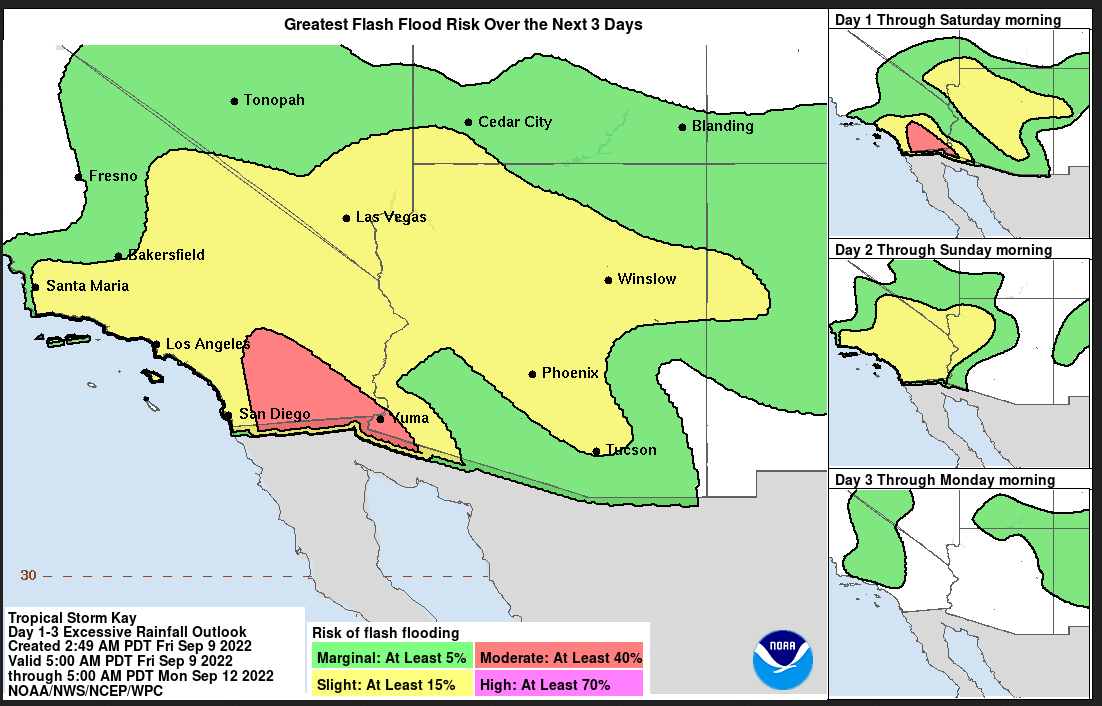
Despite the system remaining fairly far offshore, heavy rainfall is likely
across the Desert Southwest and southern California as a surge of moisture
moves northward, with several inches of rain possible through Sunday.
Hence, a Moderate Risk (level 3/4) of Excessive Rainfall is in effect on
Friday across parts of southwestern Arizona and south California, with the
threat pushing northward on Saturday leading to a Slight Risk (Level 2/4)
of Excessive Rainfall encompassing a more expansive portion of the region
on Day 2.

Further north, dangerous heat is ongoing and forecast to continue in
interior parts of California, with temperatures in the triple-digits
through Friday before the impressive upper-level ridge responsible for the
extreme temperatures finally dissipates. Above-average temperatures will
then slide northward into the Pacific Northwest through the rest of the
weekend, with highs 10 - 20 degrees F above-average possible. In addition
to the heat risk, dangerous fire weather is possible this weekend for
coastal Oregon and Washington, with expansive Red Flag Warnings issued and
the Storm Prediction Center (SPC) highlighting an Elevated Risk for fire
weather on Friday. Further east, an impressive cold front is forecast to
progress eastward through the weekend, bringing an end to above-average
temperatures in the Intermountain West, where temperatures 20-30 degrees F
below-average are possible in the northern Rockies on Friday. Furthermore,
the potential exists for mixed precipitation in the highest elevations
(above 10,000ft) of Wyoming.

Elsewhere, hot temperatures in the central and northern Plains on Thursday
will quickly be extinguished overnight and into Friday by the advancing
powerful cold front. Cool high temperatures in the 60s and 70s are
forecast for the region through the weekend, with areas further east, such
as a Missouri Valley & Midwest, not expected to be able to enjoy the
cooldown until the frontal passage on Saturday into Saturday evening.
While temperatures will be much more pleasant, the potential exists for
showers and thunderstorms associated with the cold front to spoil some
outdoor plans.

Unsettled weather is likely in the Southeast and Gulf Coast states this
weekend, as tropical moisture is forecast to funnel into the region due to
a streghtening upper-level low over the northern part of the Gulf of
Mexico. Showers and thunderstorms will lead to heavy rainfall rates at
times through Sunday, leading to a Slight Risk (level 2/4) of Excessive
Rainfall being issued for the Days 1-3 timeframe.
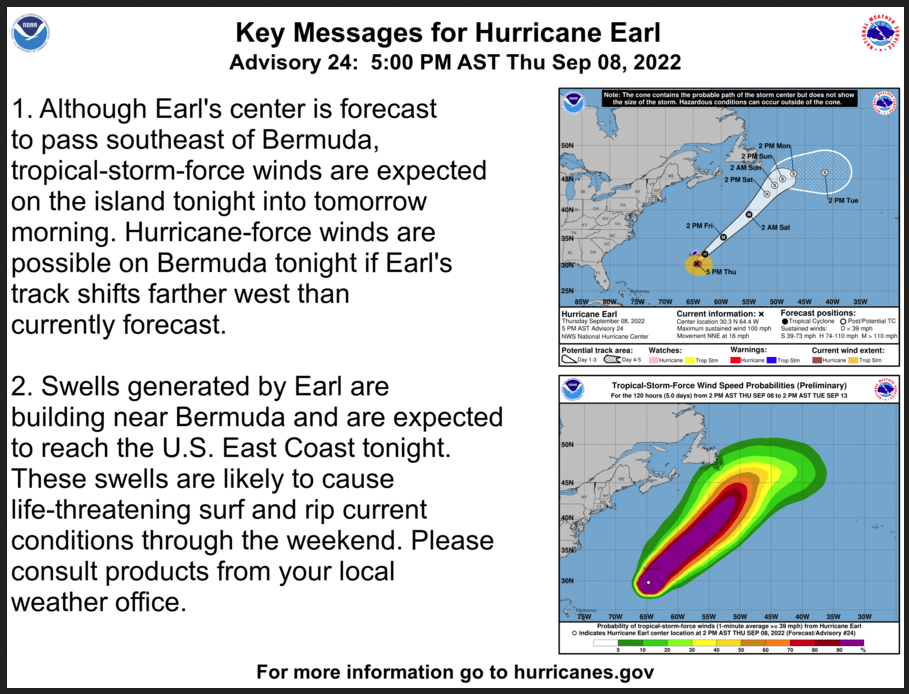
Maps that relate the forecast to geography can be found by clicking Here for Day 1 and Here for Day 2.
Here is a 60-hour animated forecast map that shows how the short-term forecast is expected to play out.
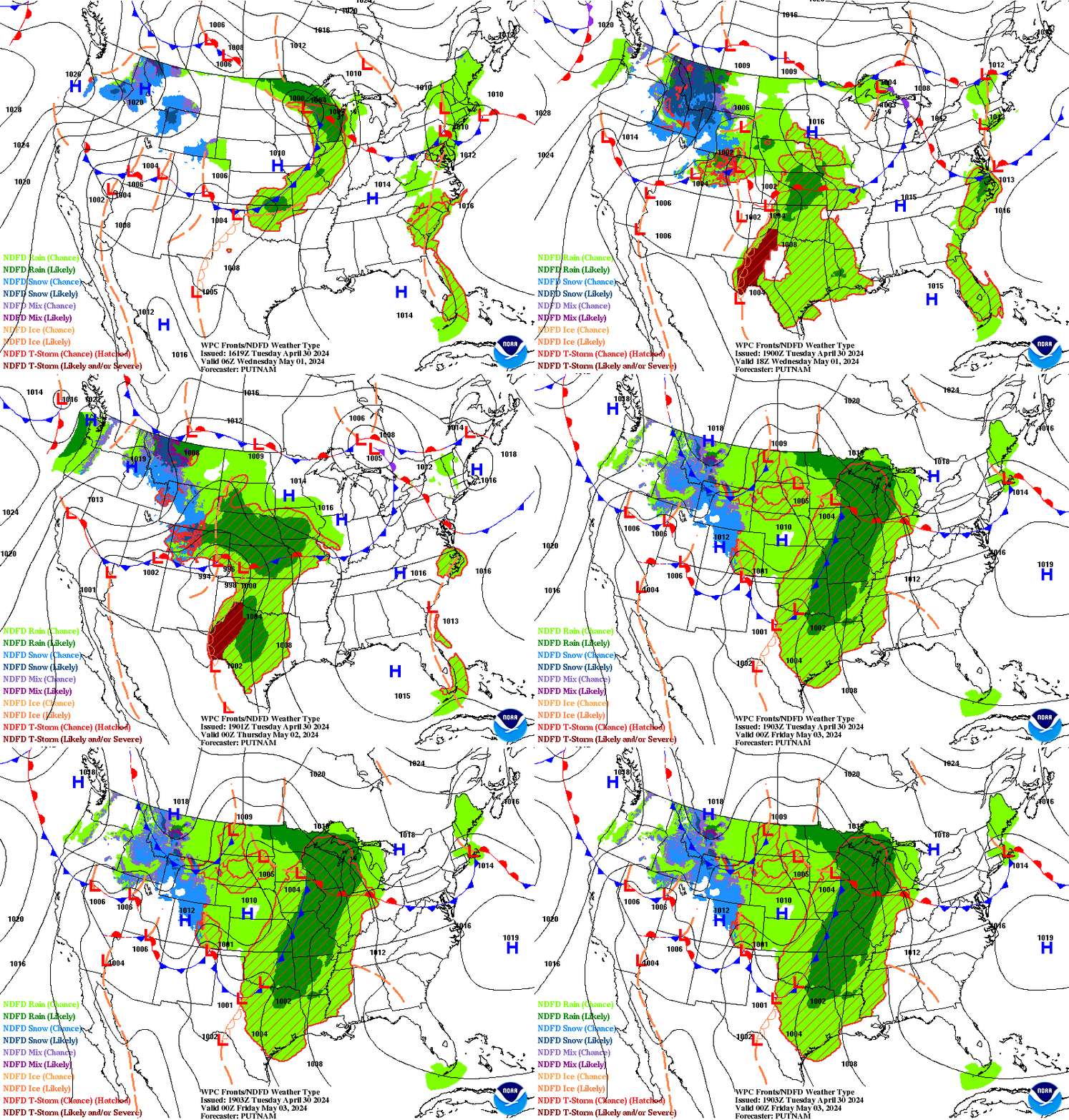
If it needs to be updated click here.
HAZARDS OUTLOOKS
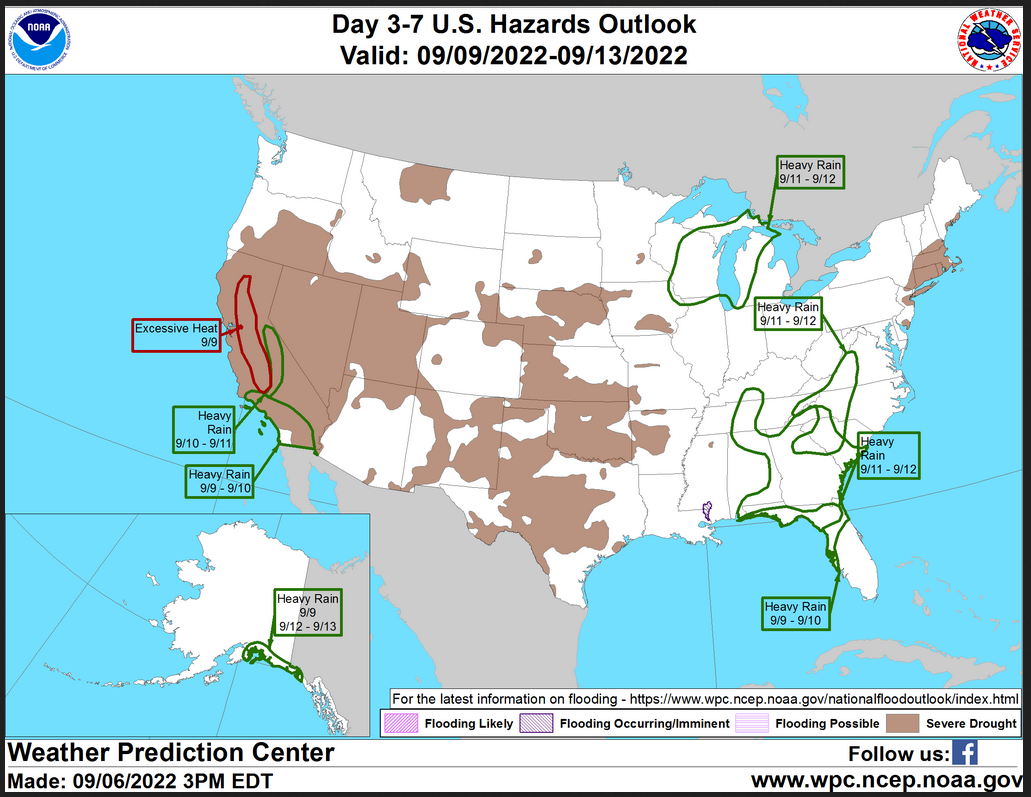
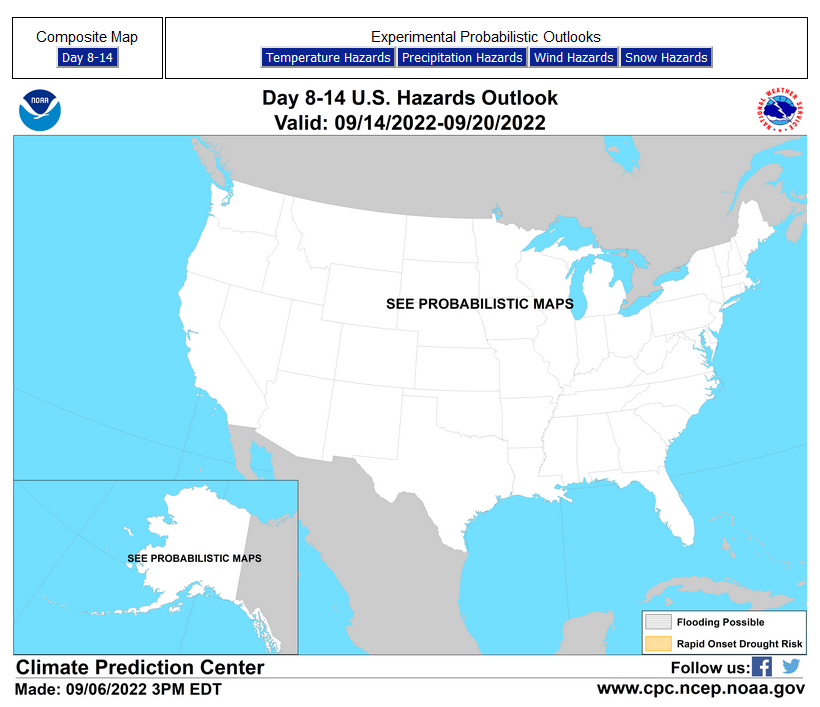
Click he re for the latest complete Day 3 -7 Hazards forecast which updates only on weekdays. Once a week probably Monday or Tuesday I will update the images. I provided the link for readers to get daily updates on weekdays. Use your own judgment to decide if you need to update these images.
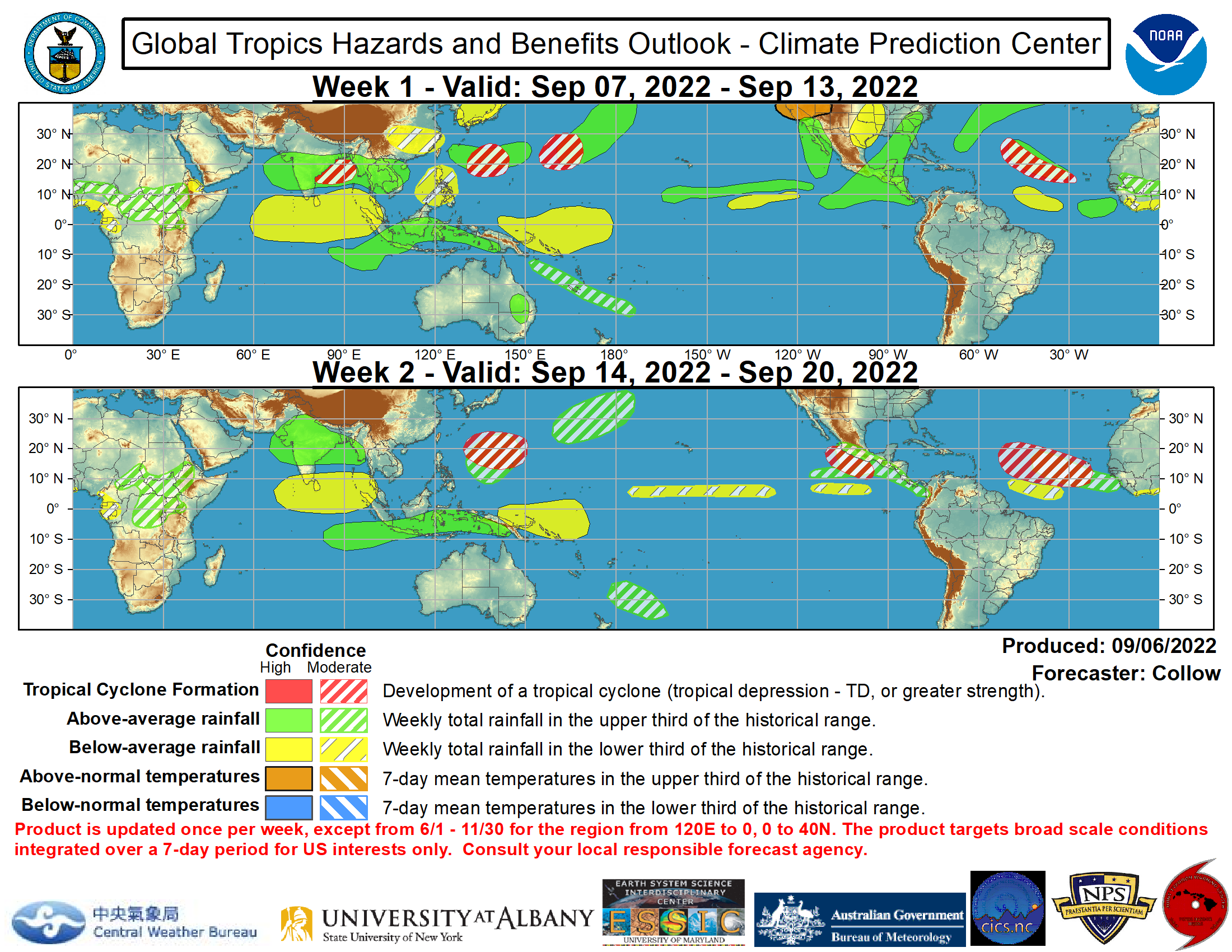
Worldwide Tropical Forecast
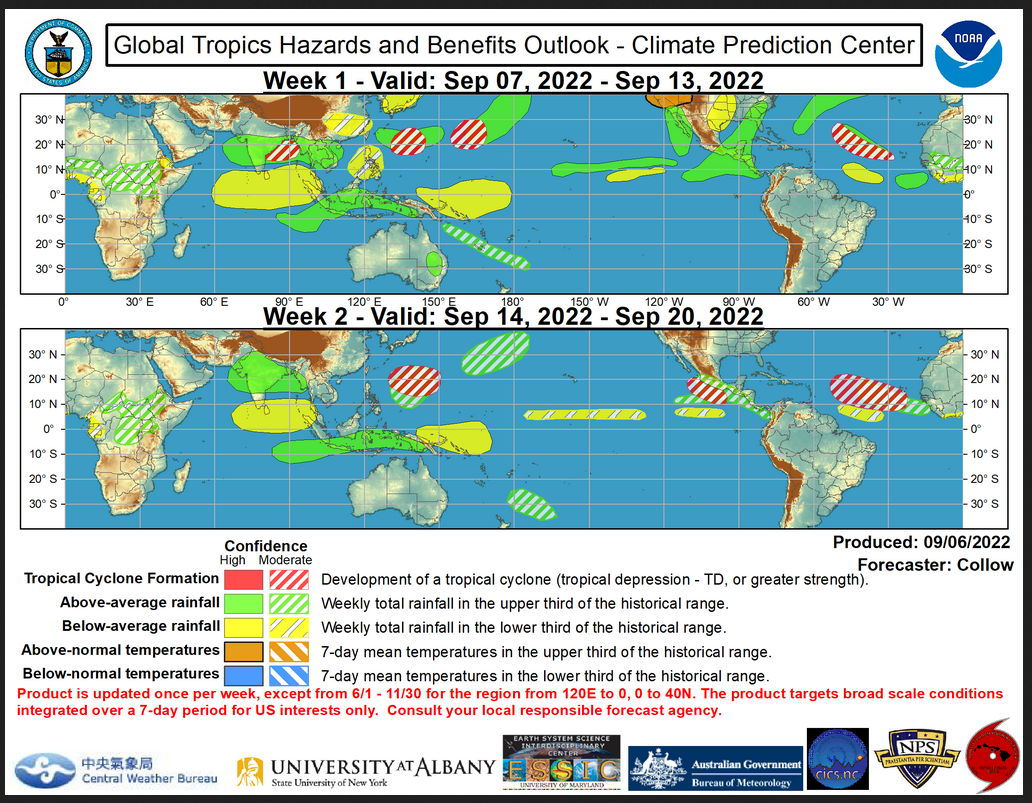
(This graphic updates on Tuesdays) If it has not been updated, you can get the update by clicking here
Detailed Maps and Reports for the Western Atlantic and the Pacific Oceans
Below are three maps that summarize the situation for the Atlantic, Eastern and Central Pacific. Additional information can be accessed by clicking HERE
First the Atlantic
Click to view the forecast map and have access to additional information https://www.nhc .noaa.gov/gtwo.php?basin=atlc&fdays=5
Then Eastern Pacific
Click to view the forecast map and have access to additional information https://www.nhc.noaa.gov/gtwo.php?basin=epac&fdays=5
Then Central Pacific
Click to view the forecast map and have access to additional information https://www.nhc.noaa.gov/gtwo.php?basin=cpac&fdays=5
And the Western Pacific
Click to view the forecast map and have access to additional information https://www.metoc.navy.mil/jtwc/jtwc.html
Some Intermediate-Term Outlooks
Links to “Outlook” maps and discussions for three time periods. Days 6 – 10, Days 8 – 14, and Weeks 3 and 4. An outlook differs from a forecast based on how NOAA uses these terms in that an “outlook” presents information from deviation from normal and the likelihood of these deviations.
You have to click on the links because they do not update automatically and I do not want to have stale images in the article. But it is not difficult to click on a link and you get a large image plus a discussion. On Fridays in a separate article, we will show the images and provide a link in this article that article. But remember what you will see is the images as of Friday. But here you can get the current images simply by clicking on them. Then hit the return arrow at the upper left of your screen to return to the article. You will not find this information easily anywhere else.

Right now you can find these maps here (We show them every Friday there but you can click above and find them).
World Forecast for Day 6 (Currently Set for Day 6 but the reader can change that)
World Weather Forecast produced by the Australian Bureau of Meteorology. Unfortunately, I do not know how to extract the control panel and embed it into my report so that you could use the tool within my report. But if you visit it Click Here and you will be able to use the tool to view temperature or many other things for THE WORLD. It can forecast out for a week. Pretty cool. Return to this report by using the “Back Arrow” usually found top left corner of your screen to the left of the URL Box. It may require hitting it a few times depending on how deep you are into the BOM tool. Below are the current worldwide precipitation and air pressure forecasts for six days out. They will not auto-update and right now are current for Day 6. If you want the forecast for a different day Click Here I will try to update this map each day but you have the link so you can access the dashboard and get a wide variety of forecasts.I mostly rely on the reader to interpret world maps. For this map, areas of expected precipitation for the date and time shown are clearly shown. The number of High-Pressure systems shown is called the Wave Number. Maybe I will discuss WN someday. But it shows how many Rossby Waves there are around the World. Sometimes they are hard to count. Counting Low-Pressure systems should provide the same WN. Rossby Waves are the way the temperature distribution of the Planet remains in balance. It is basically the science of fluid dynamics. It can be very helpful in predicting the movement of weather patterns. You can snip an area of interest and move it into MS Paint and enlarge it.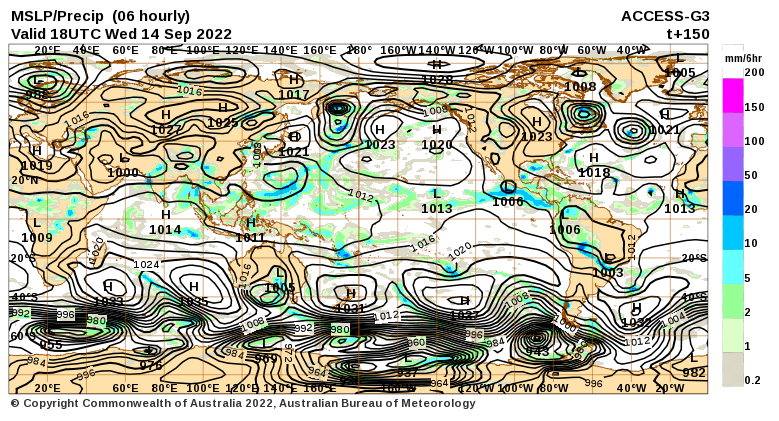 Month to Date Information
Month to date Temperature can be found at https://hprcc.unl.edu/products/maps/acis/MonthTDeptUS.png
Month to date Precipitation can be found at https://hprcc.unl.edu/products/maps/acis/MonthPNormUS.png