Much of the information in this report comes from the monthly emails I receive from John Bateman. He does public outreach for NOAA and in particular NCEI. I could find the same information and more on the NCEI website but John Bateman produces a good summary so I use it or most of it. I also add additional information from NCEI or other NOAA websites. At the end of the article, I provide links that will get you to the full reports and much additional information. This month NCEI which is based in North Carolina had a lot of computer problems so the email from John Bateman is combined U.S. and World and not as complete as usual.
| My comments if any are in boxes like this one. |

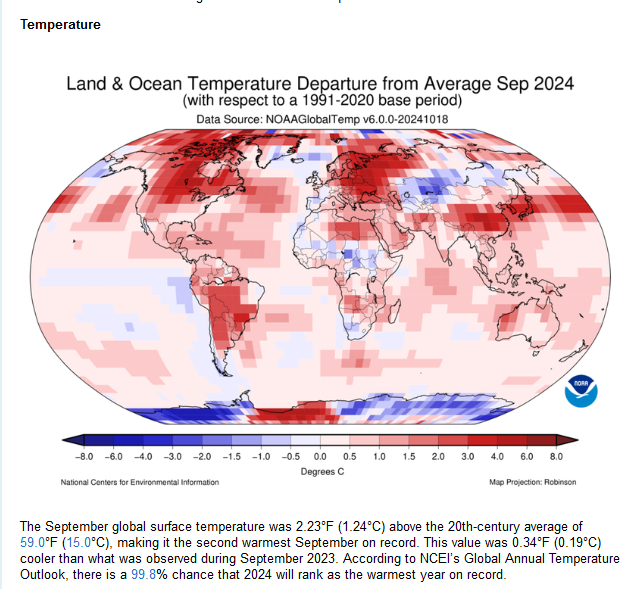
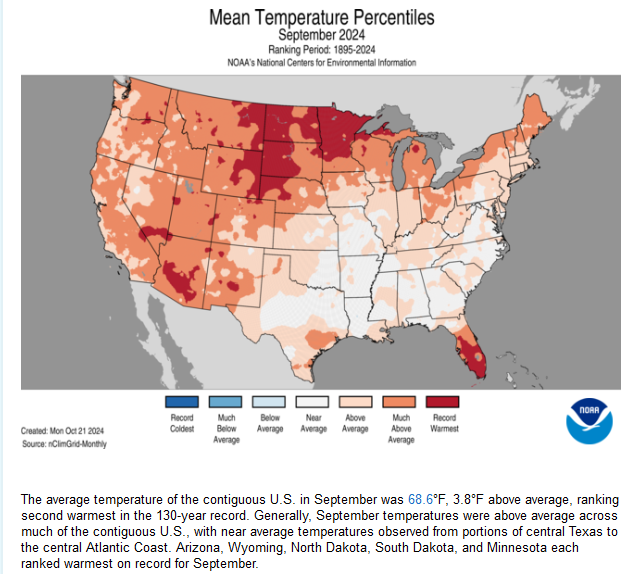
I start with the trends of September 2024 Temperature looking at North America and then the World both land and water. There is a graphic for just CONUS but the format is different and it is not as easy to read.
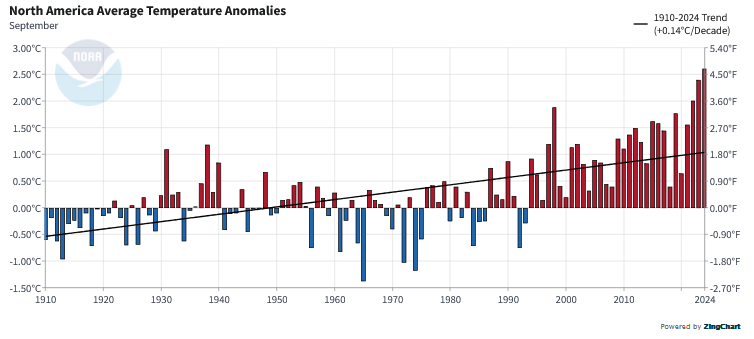
| This is the temperature trend for the month of September in North America. It covers a larger geographical area than just CONUS but I find it easier to read. It looks like the September temperature was a record. |
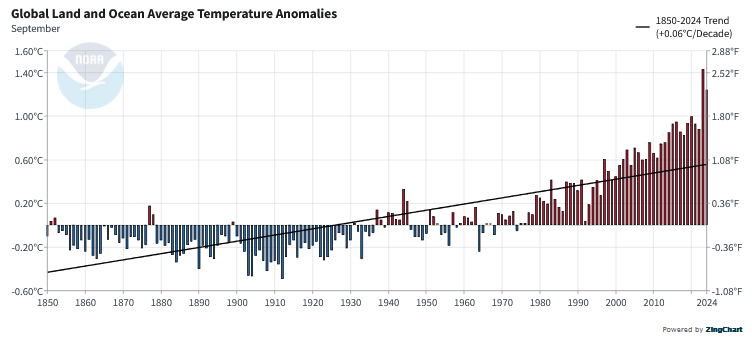
| The temperature for the world, land and ocean did not hit a new record. |
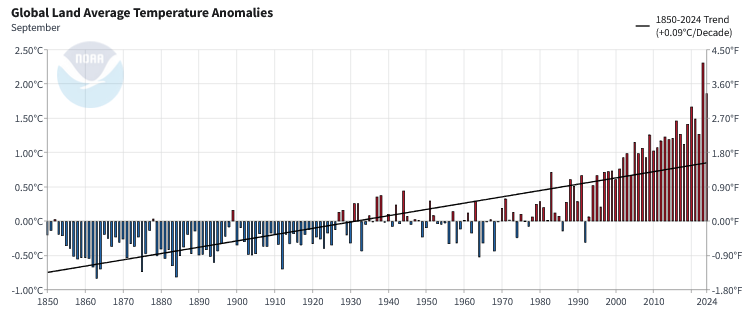
| The temperature for the world, (land only) also did not hit a new record. Notice that land temperatures increase faster than land and ocean as water takes more energy. |
To read the rest of this article some will have to click on “Read More”.
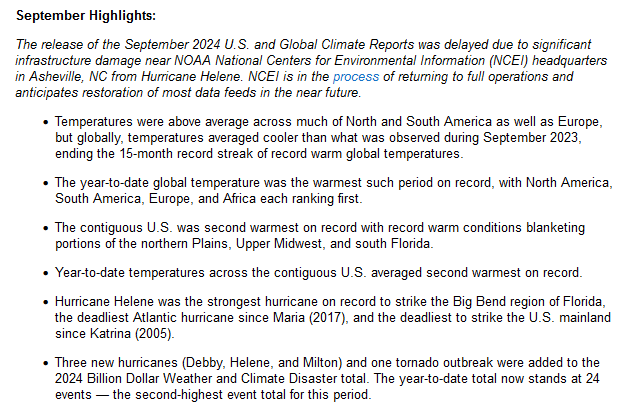
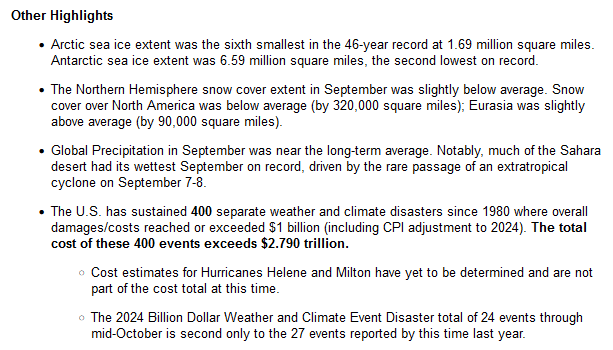
Now we present Bateman’s article for Global Climate and U.S. Climate in September of 2024.

Now I am going to present the state rankings for September relative to the 130-year history for September temperature and also precipitation.
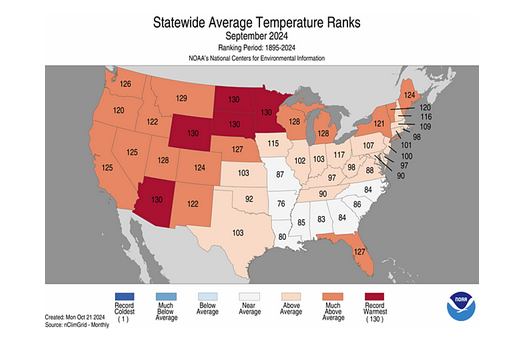
| Five states made new records and one can see the west versus east between hot versus closer to normal |
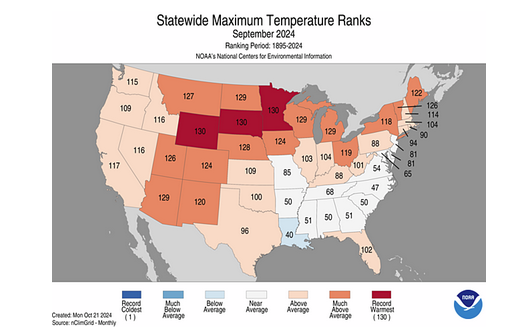
| When looking at maximum daily temperatures there is the same pattern but it is less extreme. |
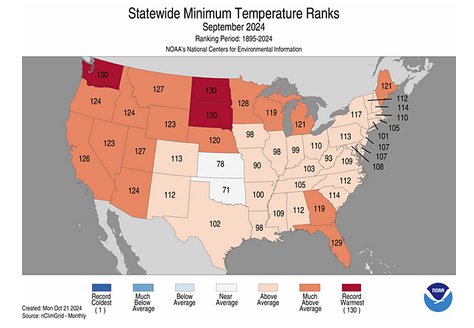
| Minimum temperatures look a lot like the average temperatures. |
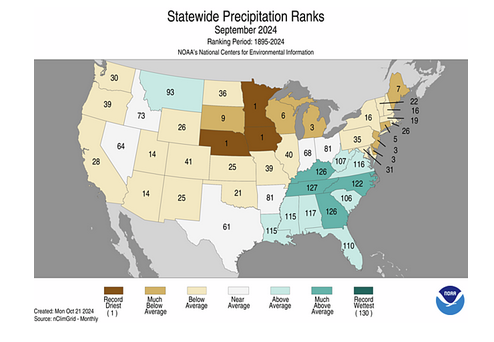
| Three states set records for dryness but the pattern was not very extreme but overall somewhat dry. But the Southeast was wet probably due to tropical storms. |
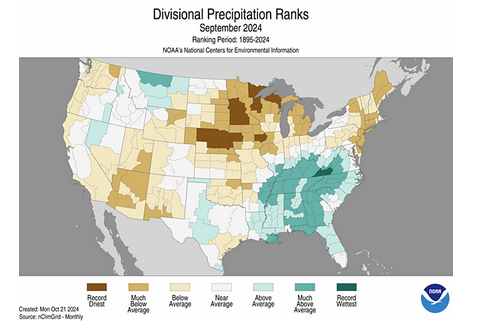
| Sometimes you get a clearer picture when you look at climate divisions within states rather than states. It looks like there was one climate division that set a record for wetness. October will be even more interesting when we have that data. |
Useful Resources Include:
Climate at a Glance which can be accessed HERE
NCEI Monthly Report which can be accessed HERE
U.S. Ranking Maps can be accessed HERE.
–
| I hope you found this article interesting and useful. |
–

